Central Mauritius
Highland living — Smart City innovation, international schools and cooler air
About Central Mauritius
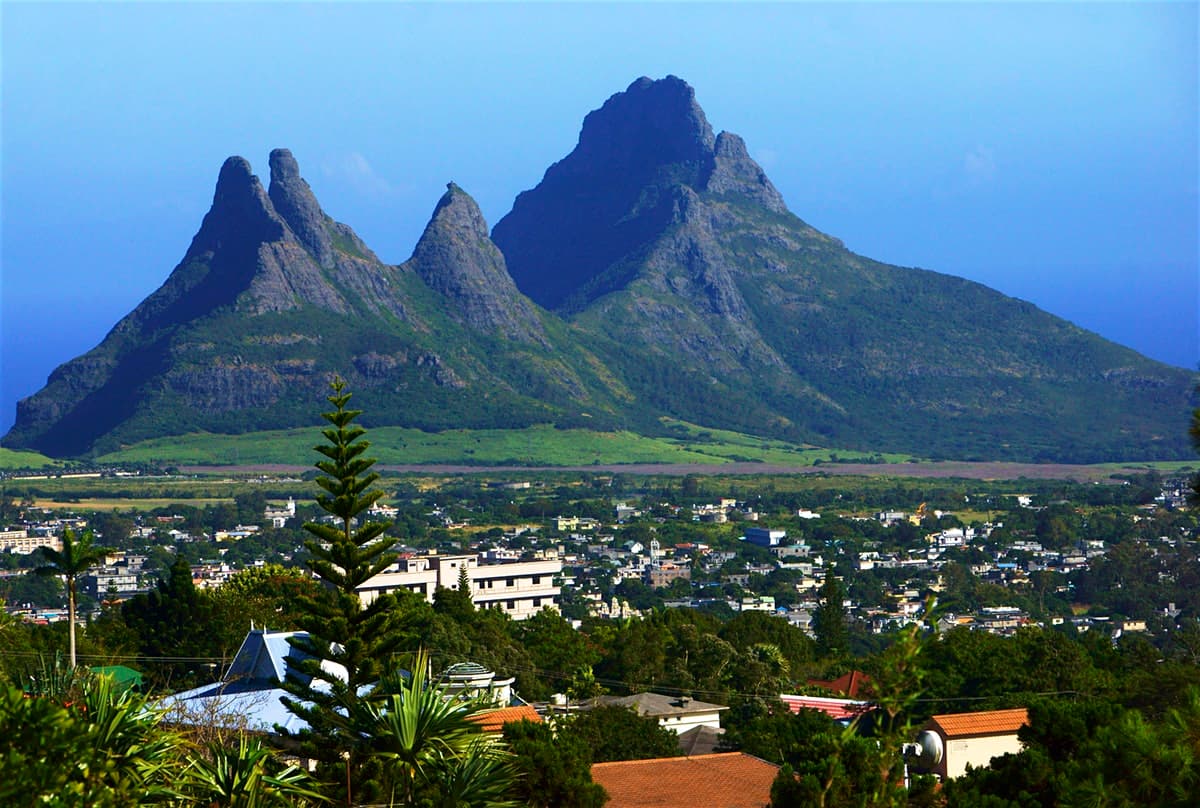
The central plateau of Mauritius — primarily the Plaines Wilhems and Moka districts — is the most densely populated and historically significant inland region of the island. Sitting at an elevation of 400–600 metres above sea level in the shadow of the central mountain range, the plateau has a distinctly different character to the coastal areas: cooler (average 10–12°C lower than the coast in the highlands), more verdant, more traditionally Mauritian. It was here that the British colonial administration established its upland hill stations in the 19th century, and it is here that the island's most substantial urban infrastructure — its largest towns, its best schools, its financial services hub — has been built.
The historical heartland of central Mauritius is shaped by the colonial era. Curepipe, the largest inland town, grew as a hill station under the British — colonial administrators and the Franco-Mauritian bourgeoisie retreated here from the heat and malaria of the coast, building large colonial townhouses along its wide avenues. The town's name is thought to derive from the French word for 'clean pipe' — a reference to the practice of cleaning smoking pipes at a rest stop on the road from Port Louis. The Trou aux Cerfs, a dormant volcanic crater now converted into a public park and viewpoint, offers panoramic views across the central plateau and, on clear days, toward all four coasts of the island simultaneously.
Moka and Quatre Bornes have been transformed over the past two decades by investment in Smart City and technology infrastructure. The Moka Smart City — a government-certified integrated development combining residential, commercial and community uses within a planned environment — has attracted major employers including BNI Madagascar, Webhelp and various BPO and financial services firms. ENL's Vivéa Business Park anchors the commercial offer alongside co-working spaces, a hotel and retail. For residents, the Smart City model means modern apartments, broadband connectivity, parks and cycling paths — an urban standard of living uncommon on the island. Parallel to this, the Ebène Cybercity (approximately 20 minutes from Moka) has established itself as the island's financial services and technology hub, home to the Mauritius Commercial Bank headquarters, AXYS and numerous offshore business entities.
Demographically, the central plateau is the most traditionally Mauritian part of the island. The Plaines Wilhems district — encompassing Beau Bassin–Rose Hill, Quatre Bornes, Vacoas-Phoenix and Curepipe — has a population of over 360,000, making it by far the most populous district. The communities here span all ethnic groups: Indo-Mauritian (Hindu and Muslim), Creole, Sino-Mauritian and Franco-Mauritian families who have been established in the highlands for generations. The central market at Quatre Bornes (known for its Thursday and Saturday markets) and the Floréal market are among the island's most authentic and vibrant retail experiences, selling textiles, crafts, fresh produce and street food at prices far below the tourist areas.
For buyers, the central plateau offers an alternative to coastal living that is increasingly compelling. International school options are the best on the island: Lycée Labourdonnais International, Riverside College, OISE and the University of Mauritius all operate in or near the Moka corridor. Property prices are generally 20–40% lower than comparable coastal areas. Modern apartments in Moka Smart City start from around Rs 5 million; Smart City developments qualify foreign buyers for Mauritius residency. The cooler, less humid climate suits many European buyers who find the coast's January–March summer intense. Access to Port Louis (20–25 minutes by motorway) and the airport (25–30 minutes) is excellent.
Area Highlights
Properties in Central Mauritius
New listings in Central Mauritius are added regularly.
Browse all Center propertiesFrequently Asked Questions
What is Moka Smart City and why is it popular with expats?
Moka Smart City is a government-certified integrated development master-planned by ENL Group in the Moka district. It combines modern residential apartments, co-working and office spaces, retail, a hotel and community infrastructure within a walkable, broadband-connected planned environment. It is popular with expats and professionals for its combination of excellent schools nearby (Lycée Labourdonnais, Riverside College), cool highland climate, easy highway access to Port Louis and the airport, and modern amenities at prices substantially below the coastal areas. Foreign buyers can qualify for Mauritius residency through qualifying Smart City purchases.
How is the climate in Central Mauritius different from the coast?
The central plateau sits at 400–600 metres elevation in the rain shadow of the central mountains. Average temperatures are 10–12°C lower than the coast — roughly 18–25°C versus 28–33°C at sea level. The highlands receive more rainfall than the west coast but less than the exposed east coast. The cooler climate is particularly appreciated from November to March, when coastal temperatures and humidity are at their highest. Many longtime Mauritius residents choose the plateau precisely for this climate advantage.
What are the best schools in Central Mauritius?
The central plateau has the island's most comprehensive international and private school offering. Lycée Labourdonnais International (Moka) is a highly regarded French-curriculum school from pre-school to secondary. Riverside College (Moka) offers an international curriculum and boarding options. OISE operates nearby. The University of Mauritius at Réduit is the island's principal university. For English-curriculum education, Northfields International School (Grand Baie, approximately 45 minutes away) is the preferred option for families based in Moka.
Is Central Mauritius suitable for property investment?
The central plateau offers the island's best value property market relative to quality — prices are 20–40% below comparable coastal locations. Moka Smart City in particular has shown strong capital appreciation since its development phase. Long-term rental demand from business professionals working in Ebène, Moka and Port Louis is consistent. Short-term rental potential is lower than the coastal areas (less tourist demand), making the central plateau better suited to long-term capital growth strategies or owner-occupier purchase than holiday rental investment.
What are the key landmarks in Central Mauritius?
Trou aux Cerfs in Curepipe is a dormant volcanic crater now used as a park, with panoramic views across the plateau and toward all four coasts on a clear day. Eureka House in Moka is the finest example of colonial Creole architecture on the island — a 19th-century colonial mansion with over 100 doors and windows, now open as a heritage museum. The Quatre Bornes and Floréal markets are authentic local shopping experiences. Ebène Cybercity is the modern face of Mauritius's financial services sector.

Karen
Local Property Expert
I know Central Mauritius well. Whether you're buying, renting or investing, I can give you an honest picture of the market and help you find the right property.
Call +230 460 4170Send an enquiryArea at a Glance
- Region
- Center
- Atmosphere
- Smart City innovation & highland colonial heritage
- Sale Range
- Rs 3M – Rs 30M
- Rental Range
- Rs 25K – Rs 90K/month
- Beach
- Inland
- Internet
- Excellent ✓
- Expat Community
- growing
- Port Louis
- 20 min
- Airport
- 25 min
- Ownership Types
- Smart CityPDSFreehold
- Foreign Buyers
- Eligible ✓
Notable Developments
- Moka Smart City
- ENL Vivéa Business Park
- Ebène Cybercity
- Highlands Smart City
Planning a purchase?
Estimate registration duty, notary fees, and total buying costs.
Buying Cost CalculatorNearby Areas
Buying in Mauritius?
Our complete guide covers legal process, costs, PDS schemes and residency.
Read the buying guide