FOR RENTExpat
Rs450K/mo
Riviere Noire · West
Ultimate Marina Lifestyle – Luxury Waterfront Residence, Private Mooring & Boat
44


Buying property in Mauritius as a foreign national is entirely possible — and more straightforward than you might think. This guide breaks down the approved acquisition schemes, residency benefits, and tax advantages that make Mauritius one of the most compelling destinations for Europe…
Mauritius has long captivated European buyers with its combination of natural beauty, political stability, and favourable tax environment. But beyond the turquoise lagoons and year-round sunshine lies a surprisingly well-structured legal framework that makes buying property here — as a non-citizen — entirely achievable. Whether you're drawn by the prospect of a permanent island retreat or a high-yielding investment, understanding the rules of acquisition is the essential first step.
Foreign nationals cannot purchase freehold land or property in Mauritius freely. However, the government has created several clearly defined schemes through which non-citizens can legally acquire residential property. These pathways have been specifically designed to attract international investment while maintaining control over land ownership — and they come with significant lifestyle and residency benefits attached.
The Property Development Scheme (PDS) is the primary route for most foreign buyers. It replaced the older IRS and RES schemes in 2015 and consolidates the best elements of both. Under the PDS, non-citizens can purchase luxury residential units — villas, apartments, or penthouses — within approved, integrated developments that typically include communal amenities such as golf courses, spas, beach clubs, and concierge services.
There is no minimum purchase price under the PDS, though in practice most properties begin around USD 375,000. Crucially, any non-citizen who purchases a PDS property worth USD 375,000 or more becomes eligible to apply for a Mauritian Residence Permit, valid for as long as they hold the property. This is one of the most compelling incentives for European buyers seeking a legitimate second residency.
The Smart City Scheme caters to a more urban, mixed-use vision of Mauritian life. Developments under this scheme combine residential, commercial, and leisure components within large master-planned communities. Non-citizens can purchase residential units within these smart cities, again with the same USD 375,000 threshold applying for residence permit eligibility. Projects like Moka Smart City and Cap Tamarin offer a glimpse of a contemporary, connected lifestyle that appeals to remote workers and entrepreneurs relocating from the UK or Europe.
For buyers interested in apartments specifically, the Ground +2 Scheme permits non-citizens to purchase units in buildings of at least three storeys, situated outside the designated schemes above. There is a minimum purchase price of USD 6,000 per square metre under this scheme, and the units must be located in specified geographic zones. Residence permit eligibility also applies at the USD 375,000 threshold.
The Invest Hotel Scheme allows non-citizens to purchase a room or suite within a hotel and benefit from rental income when they are not using it personally. Buyers are typically entitled to occupy their unit for a set number of days per year, making this an attractive option for those who want a Mauritian bolt-hole without the full costs of private ownership.
The purchase process in Mauritius follows a structured legal path. Once you've identified a property, you'll typically sign a Preliminary Agreement (Promise to Sell) and pay a deposit — usually 10% of the purchase price. The transaction is overseen by a Notary, who carries out due diligence and registers the deed. All property transactions involving non-citizens also require approval from the Economic Development Board (EDB), which assesses the purchase against current regulations.
It's worth noting that stamp duty for non-citizens purchasing under approved schemes is currently set at 5% of the property value, and there is no capital gains tax in Mauritius — a significant advantage for investors thinking long-term.
Mauritius operates one of the most investor-friendly tax environments in the world. There is no inheritance tax, no capital gains tax, and no wealth tax. The progressive personal income tax rates (up to 35%) and 15% corporate tax rate, along with a network of double taxation treaties with over 40 countries, including the UK, France, and Germany, make financial planning here considerably more straightforward than in most European jurisdictions.
Beyond the legal and financial framework, it's worth remembering what you're actually buying into: a high standard of living with world-class healthcare, international schools, a stable democracy, and a welcoming multicultural community. The north coast around Grand Baie buzzes with restaurants and boutiques; the west coast at Tamarin and Black River offers a more relaxed, surf-inflected pace; and the east coast provides secluded elegance near Belle Mare. The island is small enough to explore thoroughly, yet diverse enough to never feel limiting.
Navigating the nuances of non-citizen acquisition is far easier when you have the right guidance from the outset. At PropertyFinder Mauritius, we list an extensive portfolio of approved PDS, Smart City, and hotel scheme properties across the island, with expert advisors who understand both the legal landscape and the lifestyle you're looking for. Browse our listings today and take the first step towards owning a piece of paradise.
Hand-picked
Riviere Noire · West

Baie du Cap · South
Tamarin · West

Baie du Cap · South
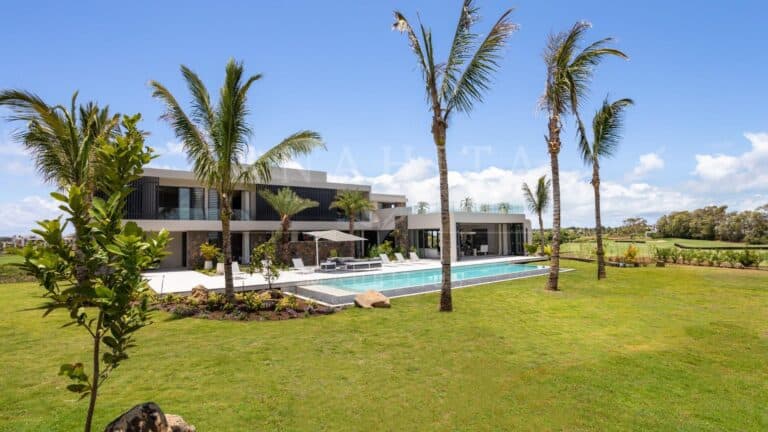
Beau Champ · East

Riviere Noire · West
Explore by region
Explore the site
Market updates, buying guidance and the best new listings, straight to your inbox.
Buying a Property · 29 Jul 2026
Who can buy, the PDS and Smart City schemes, residence permits, the buying process step by step, costs, financing and tax for foreign buyers.
Buying a Property · 19 Aug 2024
Harmonie Golf Estate on Mauritius's scenic west coast offers a rare opportunity to invest in sustainably designed luxury villas within an…
Buying a Property · 9 Aug 2024
Mauritius has evolved well beyond its reputation as a holiday destination — today it offers British and European investors a rare combination of…
Buying a Property · 8 Aug 2024
Mauritius is fast becoming one of the Indian Ocean's most attractive destinations for rental property investment, offering foreign buyers political…
Buying a Property · 29 Jul 2024
Eco Savannah is one of Mauritius's most compelling residential developments, blending sustainable architecture with luxury villa living in the…
Buying a Property · 22 Jul 2024
Les Salines in Black River, a Beachcomber resort, offers branded apartments to foreign buyers under approved schemes. Here is what to verify.
Browse our current listings or speak to an agent.