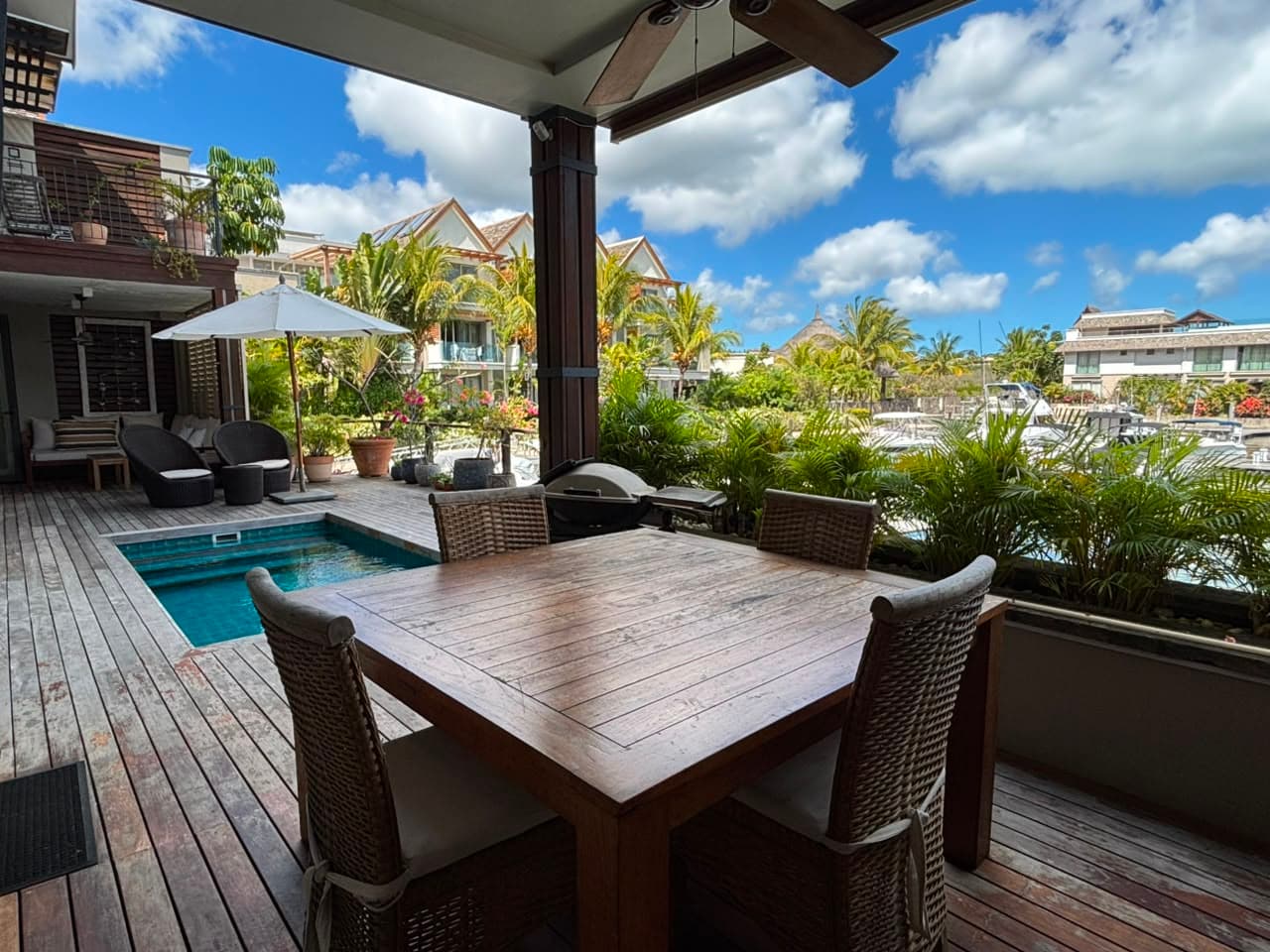
FOR RENTExpat
Rs450K/mo
Riviere Noire · West
Ultimate Marina Lifestyle – Luxury Waterfront Residence, Private Mooring & Boat
44


Can foreigners buy agricultural land in Mauritius? Understand the rules, restrictions, conversion process, and how to search listings safely.
Agricultural land in Mauritius is subject to strict ownership and usage rules that differ significantly from residential or commercial property. Foreign nationals cannot freely purchase agricultural land under standard frameworks, and even Mauritian citizens face regulatory oversight when converting or developing it. Understanding these rules before you search listings saves time, money, and legal risk.
This guide explains what agricultural land is in the Mauritian legal context, who can buy it, what conversion involves, and how to search available properties through a reliable platform.
In Mauritius, agricultural land is any parcel classified for farming, sugar cane cultivation, market gardening, or related rural uses under the Land Use Act and associated planning legislation. The classification appears on the title deed and in the cadastral records held by the Ministry of Land and Housing.
Key categories include:
The classification determines what you can build, how you can use the land, and whether a foreign buyer can acquire it at all.
Generally, no, not directly. The Non-Citizens (Property Restriction) Act restricts foreign nationals from purchasing land outside approved investment schemes. Agricultural land sits outside the main foreign-buyer frameworks such as the Property Development Scheme (PDS), the Smart City Scheme, and the Invest Hotel Scheme.
However, there are structured routes that can give foreign investors exposure to agricultural land:
A foreign investor who holds shares in a Mauritian-registered company can, in principle, have that company acquire agricultural land. The company must have legitimate business purposes tied to agricultural activity, and the transaction will be scrutinised by the Economic Development Board (EDB) and the Prime Minister's Office.
Some large estates have received approval to develop portions of agricultural land under agro-tourism or eco-resort frameworks. Foreign buyers can acquire units within these approved developments, though the underlying land remains classified under specific use conditions.
If an agricultural parcel has been or can be converted to residential or commercial use, a foreign buyer may then acquire it through the standard non-citizen property purchase process, subject to EDB approval and a minimum investment threshold (currently USD 375,000 for residential property outside a scheme).
Converting agricultural land to another use is a multi-step administrative process. It is not automatic, and approval is not guaranteed. The process typically runs as follows:
The entire process can take six to eighteen months depending on the complexity of the application and the responsiveness of the relevant authorities.
Prices vary considerably by location, size, existing infrastructure, and conversion potential.
Because pricing is opaque and highly location-dependent, working with a platform that aggregates verified listings and displays transparent pricing is essential for making informed comparisons.
Finding agricultural land through informal networks or unverified sources carries real risk, misrepresented classifications, disputed titles, and inflated asking prices are not uncommon. A structured property search platform helps buyers filter by land type, location, and price, and presents listings with the information needed to begin proper due diligence.
Property Finder Mauritius is a dedicated listing platform for the Mauritian real estate market. It covers residential, commercial, and land listings, including agricultural and mixed-use parcels, and is designed for internationally mobile buyers who need clear, reliable information before engaging a notary or legal advisor.
Using the platform, buyers can:
The platform does not charge buyers a search or listing fee. Agent fees and notarial costs are separate and governed by standard Mauritian conveyancing practice.
Before making any offer on agricultural land, a buyer, or their appointed notary, should verify the following:
A Mauritian notary is legally required for all property transactions and will conduct most of these checks as part of the conveyancing process. Engaging one early, before signing any preliminary agreement, is strongly advised.
Hand-picked
Riviere Noire · West

Tamarin · West


Baie du Cap · South

Tamarin · West

Baie du Cap · South

Beau Champ · East
Explore by region
Explore the site
Market updates, buying guidance and the best new listings, straight to your inbox.
Mauritius Real Estate · 16 Oct 2026
Everything you need to know about house rental in Mauritius: costs, locations, lease rules, and how to find the right property. Updated guide for…
Mauritius Real Estate · 16 Oct 2026
Explore the west coast of Mauritius: top neighbourhoods, property market, beaches, lifestyle, and what foreign buyers need to know before purchasing.
Mauritius Real Estate · 15 Oct 2026
Seen our properties on PropertyCloud? How the listings match, what you get searching with us directly, and the essentials of buying in Mauritius.
Mauritius Real Estate · 13 Oct 2026
Where to find a business park in Mauritius, what leasing or buying costs, and how foreign companies set up. Covers Ebène, Grand Baie, Pailles and…
Mauritius Real Estate · 12 Oct 2026
A practical guide to business insurance in Mauritius for property owners, landlords, and investors. Covers key cover types, costs, and what to check…
Mauritius Real Estate · 10 Oct 2026
Everything you need to know about getting a skipper license in Mauritius, from exam requirements to costs, plus how it connects to waterfront living.
Browse our current listings or speak to an agent.


