FOR SALEExpat
€1.0M
Baie du Cap · South
Bioclimatic Villa in Mauritius – 3-Bedroom Luxury Home with Private Pool
33

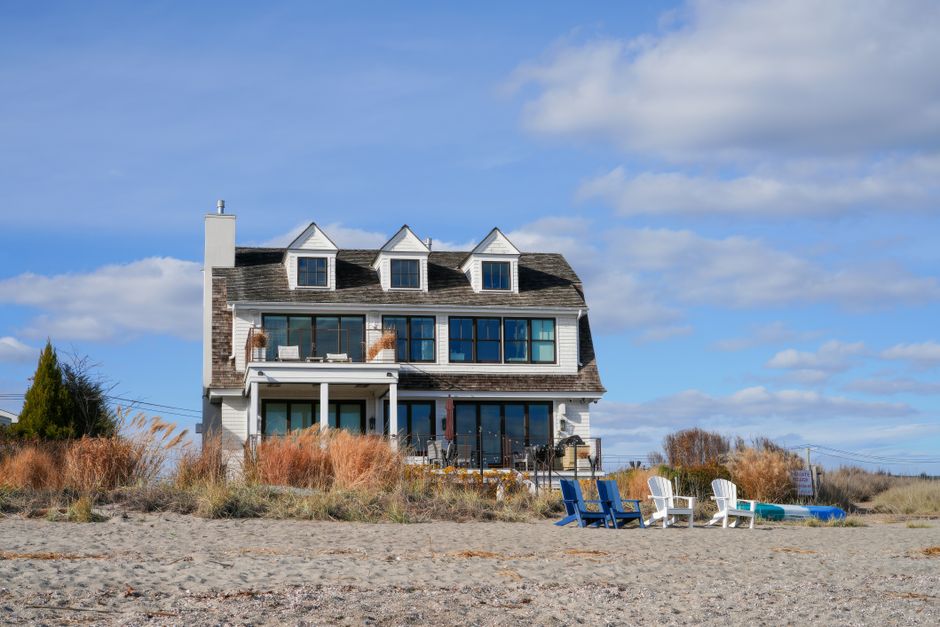
Everything foreign buyers need to know about purchasing a Beach Estate in Mauritius, legal frameworks, costs, process, and how to find the right property.
A Beach Estate in Mauritius is a gated residential development positioned directly on or within walking distance of the coastline, typically offering a mix of villas, apartments, and penthouses under a single managed title. These estates are purpose-built for both permanent living and investment, and many qualify under the Property Development Scheme (PDS) or the Smart City Scheme, the two primary legal channels through which foreign nationals can purchase freehold property in Mauritius.
Understanding what distinguishes a Beach Estate from other property types is important before you begin searching. The term is not a legal classification; it describes a category of development defined by its location, amenity offering, and management structure. What matters legally is whether the specific estate is approved under a scheme that permits foreign ownership.
Beach Estate developments attract internationally mobile buyers for several practical reasons that go beyond the coastal setting.
Freehold ownership is available. Under the PDS, foreign nationals can hold freehold title to a residential unit with no restriction on repatriation of sale proceeds or rental income, provided the purchase price meets the minimum threshold (currently USD 375,000).
Residency rights are attached. A qualifying PDS purchase grants the buyer and their dependants a Mauritian Occupation Permit for the duration of ownership. This is a significant draw for South African and European buyers who want a formal right to live in Mauritius.
Professional management is built in. Most Beach Estate developments include on-site management, landscaping, security, and often a hotel or resort operator. This reduces the friction of owning property abroad.
Rental income is straightforward. Mauritius has no capital gains tax and a flat income tax rate of 15%. Rental income from a Mauritian property is taxed at this rate, and double taxation treaties with several countries, including France, the UK, and South Africa, reduce the overall burden further.
The most efficient starting point for any international buyer is a property portal that lists Mauritius-specific inventory with verified details on scheme type, pricing, and availability. A good portal will allow you to filter by property category (villa, apartment, penthouse), by region (Grand Baie, Tamarin, Belle Mare, Bel Ombre), and by legal scheme.
Property Finder Mauritius is one such portal, designed specifically for the Mauritian market. It lists Beach Estate developments alongside full scheme documentation, pricing tiers, and direct contact with licensed agents. The service is free to use for buyers, costs on the platform are borne by developers and agencies, not purchasers.
When reviewing a Beach Estate listing, confirm the following before making any enquiry:
Buying a Beach Estate in Mauritius follows a defined legal sequence. Here is what to expect at each stage.
Once you identify a property, you sign a Reservation Agreement and pay a reservation deposit, typically 1–2% of the purchase price. This removes the unit from the market while due diligence is conducted. Your Mauritian notary will verify the title, confirm scheme approvals, and check for any encumbrances.
This is the binding pre-sale contract, signed before a notary. It sets out the full purchase price, payment schedule, completion date, and any conditions precedent. A deposit of 10% is usually paid at this stage.
For PDS properties, the Economic Development Board (EDB) of Mauritius must authorise the foreign purchase. Your notary submits the application. Processing typically takes four to eight weeks. The EDB charges a one-time authorisation fee of USD 70,000 for PDS purchases, this is a government levy, not a developer or agent fee.
Once EDB authorisation is received, the final Deed of Sale is signed before a notary. The balance of the purchase price is transferred, and the title is registered at the Conservatoire des Hypothèques. Ownership transfers legally at this point.
Following registration, the buyer applies to the EDB for an Occupation Permit. Required documents include the registered Deed of Sale, proof of funds, and passport copies. The permit is typically issued within three to six weeks.
Foreign buyers are often surprised by the total cost of acquisition. The table below summarises the main items.
| Cost Item | Approximate Amount | |---|---| | EDB Authorisation Fee (PDS) | USD 70,000 (one-time) | | Notary Fees | 1–2% of purchase price | | Registration Duty | Exempt for PDS properties | | Land Transfer Tax | Exempt for PDS properties | | Agent Commission | Paid by seller/developer | | Annual Management Levy | Varies by estate (USD 3,000–15,000 p.a.) |
Buyers pay no agent commission directly, the selling agent's fee is covered by the developer or vendor. This makes using a qualified agent or a property portal a cost-neutral step for the purchaser.
Mauritius has four main coastal corridors, each with a different character.
North (Grand Baie, Pereybere): The most developed stretch, with the highest concentration of restaurants, retail, and nightlife. Popular with French and European buyers. Beach Estates here tend to be more densely built.
West (Tamarin, Black River, La Preneuse): Favoured by South African buyers and surf enthusiasts. More relaxed in pace, with strong community infrastructure. Several large PDS estates are located here.
East (Belle Mare, Trou d'Eau Douce): Known for the longest stretches of white sand and calmer lagoon water. Home to several resort-integrated Beach Estates with hotel management. Popular with buyers seeking rental yield.
South (Bel Ombre, Le Morne): The least developed and most private stretch. Larger land parcels, lower density, and a quieter lifestyle. Suited to buyers prioritising space over proximity to amenities.
A property finder service in Mauritius acts as a buyer's advocate, identifying suitable Beach Estate options, arranging viewings, and guiding you through the legal process. This is distinct from a selling agent, who represents the developer.
Property Finder Mauritius offers a curated search platform where listings are verified and scheme details are clearly disclosed. The service is free for buyers. It connects you directly with licensed agents who specialise in each region, reducing the risk of receiving incomplete or inaccurate information from a developer's own sales team.
When evaluating any property finder service, check whether the agents listed are registered with the Real Estate Agent Authority (REAA) of Mauritius. Registration is mandatory under the Real Estate Agent Authority Act 2008, and working with an unregistered agent creates legal risk for the buyer.
Hand-picked
Baie du Cap · South

Riviere Noire · West

Tamarin · West

Beau Champ · East

Tamarin · West

Baie du Cap · South
Explore by region
Explore the site
Browse our current listings or speak to an agent.