FOR RENTExpat
Rs450K/mo
Riviere Noire · West
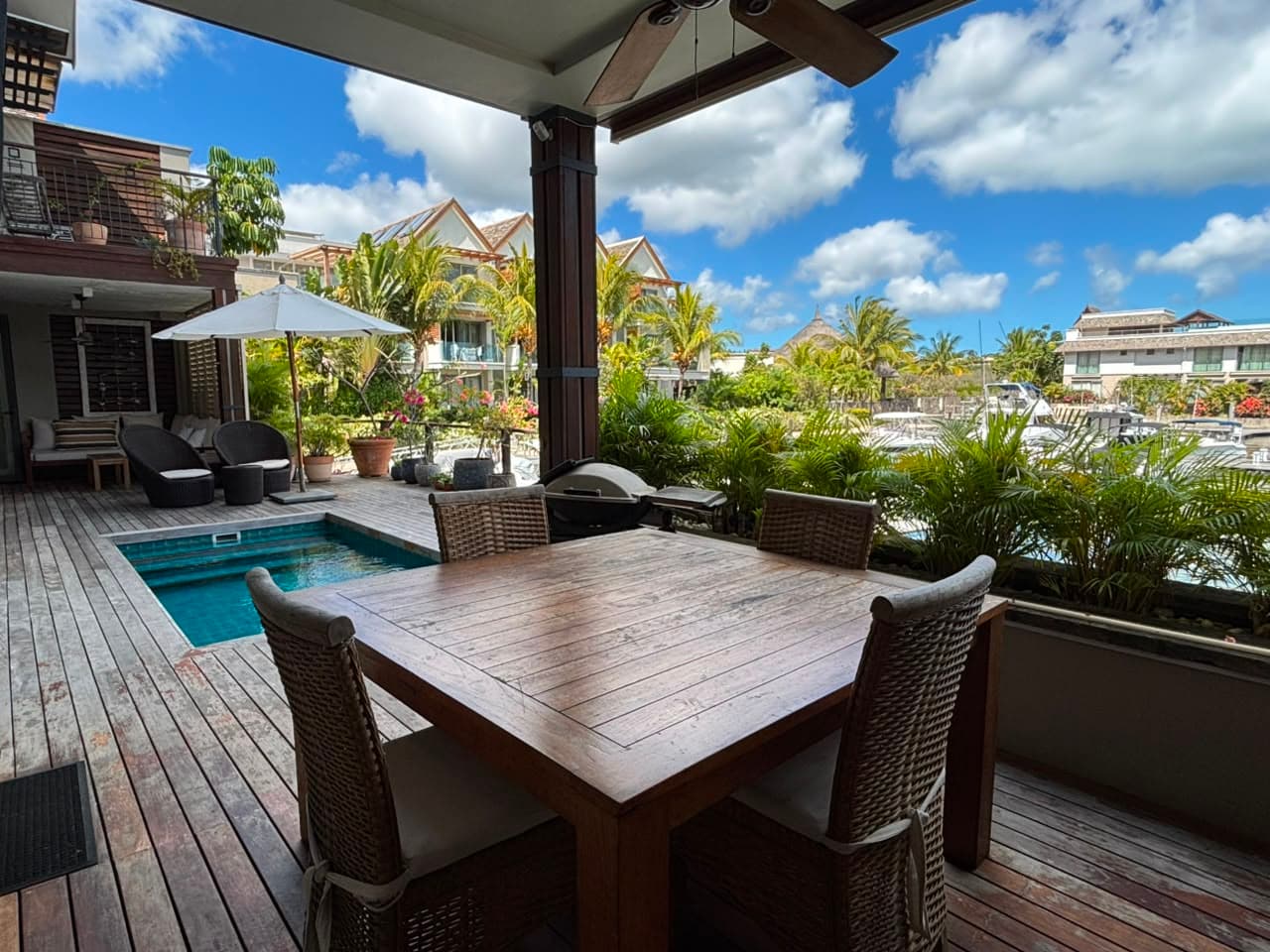
Ultimate Marina Lifestyle – Luxury Waterfront Residence, Private Mooring & Boat
44


Thinking of buying a villa in Mauritius? This plain-English guide covers the legal frameworks, costs, process steps, and what to look for as a foreign buyer.
Buying a villa in Mauritius as a foreign national is entirely achievable, and for many buyers, it is one of the most straightforward property purchases they will make outside their home country. The legal routes are well-defined, the ownership rights are genuine freehold, and the process follows a predictable sequence from offer to registered deed. This guide explains every stage clearly, so you can move forward with confidence rather than caution.
Villas account for the majority of foreign property acquisitions in Mauritius, largely because they sit within the government-approved schemes, primarily the Property Development Scheme (PDS), that grant non-citizens the legal right to purchase. These developments are purpose-built for the international market, offering full freehold title, professional management services, and access to residency permits when the purchase price meets the qualifying threshold (currently USD 375,000 or its equivalent).
Beyond the legal framework, villas offer practical advantages: private outdoor space, pools, proximity to golf courses or the coast, and layouts that suit families or those working remotely. Many buyers also hold their villa as a rental asset when not in residence, generating income in a market with consistent demand from short-stay visitors.
Foreign nationals, including British, European, South African, and other non-citizen buyers, can purchase a villa in Mauritius only within government-approved schemes. These include:
Purchases outside these schemes, such as standalone plots or older residential homes, are generally not available to foreign nationals without a specific exemption from the Prime Minister's Office.
Purchasing a villa at or above USD 375,000 within an approved scheme entitles the buyer, and qualifying dependants, to a Mauritian residence permit valid for the duration of ownership. This is not automatic: the application is submitted to the EDB after the Deed of Sale is registered, but approval is routinely granted to eligible buyers.
Before viewing properties, establish your parameters clearly: location preference (north, west, east coast, or inland), number of bedrooms, proximity to amenities, and whether rental income is part of the plan. Budget should account not just for the purchase price but for all associated costs (detailed below).
A reputable property platform covering Mauritius will list PDS villas, resale properties, and off-plan developments with verified pricing and scheme details. Look for platforms that provide scheme classification, developer credentials, and location mapping, not just photographs. Property Finder Mauritius, for example, offers structured listings with scheme information and direct agent contact, making it straightforward to compare options across the island.
In Mauritius, the notary is the central legal figure in any property transaction. Unlike many jurisdictions, the notary here acts for both parties and is responsible for verifying title, drafting all documents, and registering the deed. Engaging a notary early, ideally before you make an offer, means you have independent legal oversight from the outset.
Once you agree on a price, a preliminary agreement is signed. This document sets out the agreed price, conditions precedent (such as financing approval or EDB clearance), and the timeline to the Deed of Sale. A deposit, typically 10% of the purchase price, is paid at this stage and held in escrow.
During the period between the preliminary agreement and the Deed of Sale, your notary will:
This period typically runs six to twelve weeks, though it can be shorter for straightforward resale transactions.
The Deed of Sale is signed before the notary, with both buyer and seller (or their authorised representatives) present. The balance of the purchase price is transferred, and the deed is then registered with the Registrar-General's Department. Registration confirms your legal ownership.
If your purchase qualifies for a residence permit, the EDB application is submitted post-registration. Processing times vary but are typically completed within a few months of submission.
Understanding the full cost of purchase prevents late surprises. The main items are:
| Cost Item | Typical Amount | |---|---| | Registration Duty | 5% of purchase price | | Notary Fees | Approximately 1–1.5% (regulated scale) | | EDB Processing Fee | Fixed government fee (minor) | | Agent Commission | Usually paid by the vendor; confirm in advance | | Land Transfer Tax | Applicable in some resale scenarios; notary advises | | Annual Property Tax (IPI) | Levied on properties above a value threshold |
For a villa purchased at USD 500,000, total transaction costs typically fall in the range of 6–8% of the purchase price when registration duty and notary fees are combined. Your notary will provide a precise cost estimate before you commit to the preliminary agreement.
The quality of your property search depends heavily on the platform you use. The most useful platforms for buying a villa in Mauritius share several characteristics:
Property Finder Mauritius is designed specifically for this audience, offering structured villa listings alongside practical information on the legal framework, costs, and residency routes. The platform's approach is to give buyers enough information to ask the right questions, of agents, notaries, and developers, rather than to obscure detail behind a sales funnel.
Skipping the notary until late in the process. The notary is not a formality, they are your primary legal protection. Engage one before signing anything.
Assuming all villas are available to foreign buyers. Only properties within approved schemes qualify. Always confirm scheme classification before investing time in a viewing.
Underestimating transaction costs. Registration duty alone is 5% of the purchase price. Factor this in from the start.
Relying on verbal assurances about rental income. If rental yield is important to you, request verified historical rental data and review the development's management agreement carefully.
Not visiting before committing. Photographs and virtual tours are useful for shortlisting, but a physical visit, ideally at different times of day, remains the most reliable way to assess a property and its surroundings.
Buying a villa in Mauritius works well when buyers approach it methodically: confirm the legal route, engage professional advisers early, understand the full cost picture, and use a reliable platform to find verified listings. The process is not complex, but it does require attention to the specific rules that apply to foreign ownership. Follow the sequence above and you will reach registration with no unpleasant surprises.
Hand-picked
Riviere Noire · West

Tamarin · West


Baie du Cap · South

Tamarin · West

Baie du Cap · South

Beau Champ · East
Explore by region
Explore the site
Market updates, buying guidance and the best new listings, straight to your inbox.
Mauritius Real Estate · 16 Oct 2026
Everything you need to know about house rental in Mauritius: costs, locations, lease rules, and how to find the right property. Updated guide for…
Mauritius Real Estate · 16 Oct 2026
Explore the west coast of Mauritius: top neighbourhoods, property market, beaches, lifestyle, and what foreign buyers need to know before purchasing.
Mauritius Real Estate · 15 Oct 2026
Seen our properties on PropertyCloud? How the listings match, what you get searching with us directly, and the essentials of buying in Mauritius.
Mauritius Real Estate · 13 Oct 2026
Where to find a business park in Mauritius, what leasing or buying costs, and how foreign companies set up. Covers Ebène, Grand Baie, Pailles and…
Mauritius Real Estate · 12 Oct 2026
A practical guide to business insurance in Mauritius for property owners, landlords, and investors. Covers key cover types, costs, and what to check…
Mauritius Real Estate · 10 Oct 2026
Everything you need to know about getting a skipper license in Mauritius, from exam requirements to costs, plus how it connects to waterfront living.
Browse our current listings or speak to an agent.


