FOR RENTExpat
Rs450K/mo
Riviere Noire · West
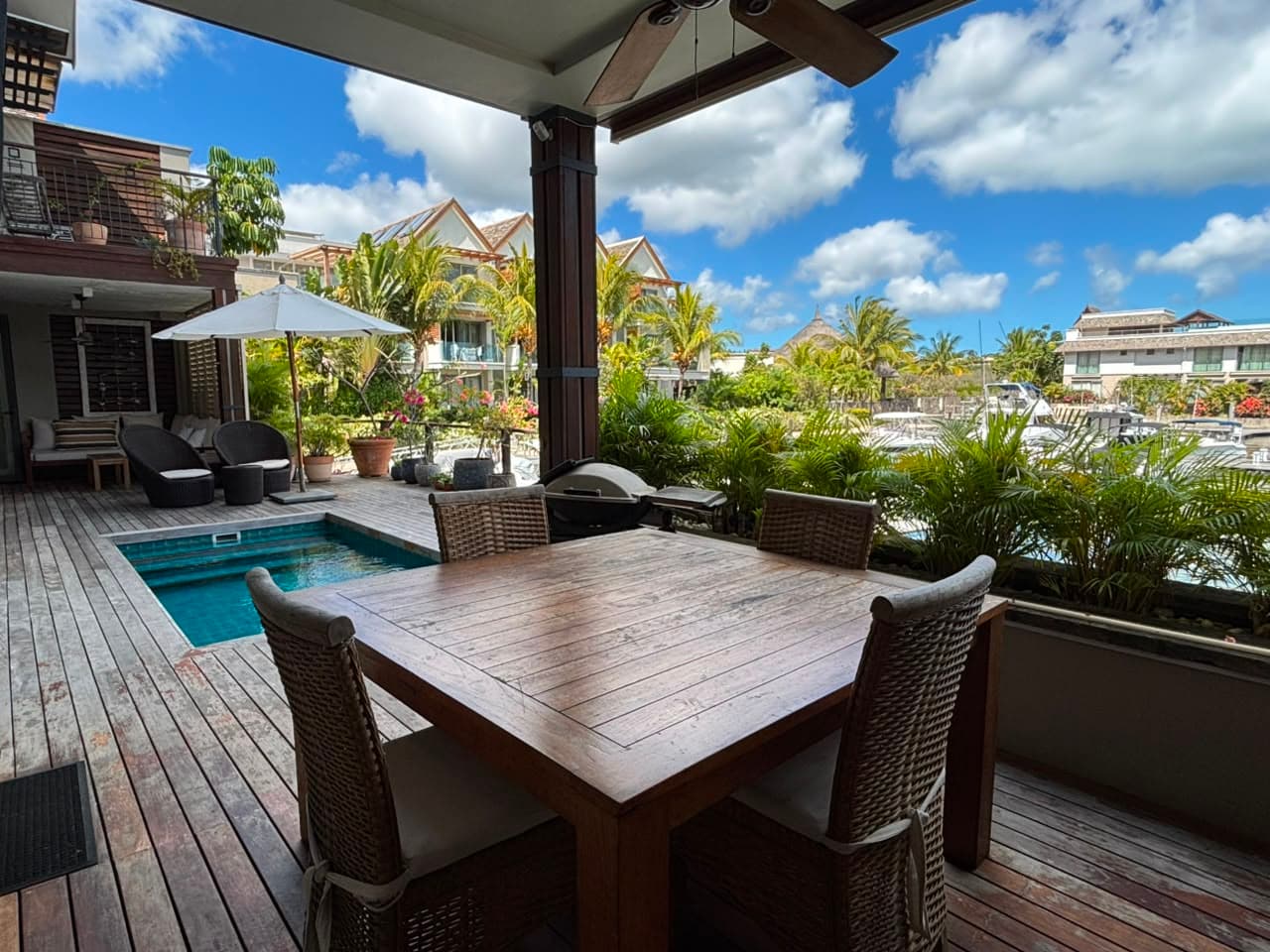
Ultimate Marina Lifestyle – Luxury Waterfront Residence, Private Mooring & Boat
44


Understand what Complex Mauritius means for foreign buyers, costs, process, legal frameworks, and how to find the right gated estate property in Mauritius.
In Mauritius, the term complex refers to a managed, gated residential development, typically a collection of villas, apartments, or penthouses built within a shared-amenity environment. These developments operate under a co-ownership or syndic structure, meaning each owner holds title to their individual unit while sharing responsibility for communal infrastructure such as pools, gardens, security, and access roads.
For foreign buyers, purchasing within a complex is often the most straightforward legal route to property ownership in Mauritius. Most qualifying complexes fall under one of the government-approved investment schemes, primarily the Property Development Scheme (PDS), which grants non-citizens the right to buy and, above a certain price threshold, to apply for a Mauritian residence permit.
Understanding what a complex is, how it is structured, and what it costs to own within one is essential before committing to any purchase.
Every residential complex in Mauritius that contains multiple units is governed by a syndic, a management body elected by owners and responsible for maintaining communal areas, collecting levies, and enforcing the estate's rules. This is broadly similar to a homeowners' association or a residents' management company in the UK or South Africa.
When you buy a unit in a complex, you receive:
The syndic is regulated under Mauritian civil law, and the rules of co-ownership (règlement de copropriété) are registered with the notary at the time the development is created. Buyers receive a copy of this document before signing any sale agreement, reviewing it carefully is strongly recommended.
The PDS replaced earlier schemes (IRS and RES) and is currently the primary framework under which foreigners can buy residential property in Mauritius. A PDS complex must meet specific criteria set by the Economic Development Board (EDB), including minimum investment in social amenities and green space.
Key facts about PDS complexes:
Buyers often focus on the purchase price and overlook the full cost picture. Here is a realistic breakdown of what to budget.
| Cost | Typical Amount | |---|---| | Registration duty | 5% of purchase price | | Notary fees | 1–2% of purchase price | | Land transfer tax | 5% of purchase price (seller pays, but affects negotiation) | | EDB application fee | Fixed government fee (check current rate with EDB) | | Legal / due diligence | MUR 30,000–80,000 depending on complexity |
Registration duty for PDS properties purchased by foreigners is fixed at 5%, and this is one of the more predictable costs in the transaction. Your notary will calculate the exact figure based on the declared sale price.
Once you own a unit, you will pay:
Asking for two to three years of audited syndic accounts before signing is standard practice and gives you a clear view of how the estate is managed financially.
The process follows a well-defined sequence. Knowing each stage in advance reduces delays and avoids last-minute surprises.
Confirm with the developer or seller that the complex holds current PDS approval from the EDB. This is a non-negotiable starting point for foreign buyers. Your agent or notary can verify this directly with the EDB registry.
This is a legally binding contract that locks in the price, payment schedule, and conditions precedent. A deposit, typically 10%, is paid at this stage and held in escrow by the notary. The preliminary agreement should include:
For PDS purchases, the buyer must submit an application to the EDB. This involves identity documents, source-of-funds documentation, and the signed preliminary agreement. Processing times currently average six to ten weeks, though this can vary.
Once EDB approval is granted, both parties sign the Deed of Sale before a Mauritian notary. The balance of the purchase price is paid at this point. The notary then registers the deed with the Conservatoire des Hypothèques, and you become the legal owner.
If your purchase meets the threshold, you can apply to the EDB for a residence permit immediately after the Deed of Sale is registered. The permit is linked to ownership and lapses if the property is sold.
Searching for a complex property in Mauritius is most effective when you use a platform that lists verified, EDB-approved developments alongside resale units from private sellers and local agencies.
Property Finder Mauritius aggregates listings from across the island, including PDS complexes, apartment developments in Grand Baie and Tamarin, and villa estates in the south and east, and presents them with enough detail to make an informed shortlist before engaging agents or developers directly.
When evaluating any listing, look for:
Not all complexes are managed to the same standard. Before committing, assess the following:
Financial health of the syndic, Are levies up to date? Is there a reserve fund for major repairs? Underfunded syndicates are a common source of owner disputes.
Occupancy rate, A complex with a high proportion of absentee or non-paying owners can create maintenance problems and affect resale values.
Rules on short-term rentals, Some complexes restrict Airbnb-style lettings. If rental income is part of your plan, confirm what is permitted under the règlement de copropriété.
Developer reputation, For off-plan purchases, research the developer's completed projects. Visit them if possible, and speak to existing owners.
Hand-picked
Riviere Noire · West

Tamarin · West


Baie du Cap · South

Tamarin · West

Baie du Cap · South

Beau Champ · East
Explore by region
Explore the site
Market updates, buying guidance and the best new listings, straight to your inbox.
Mauritius Real Estate · 16 Oct 2026
Everything you need to know about house rental in Mauritius: costs, locations, lease rules, and how to find the right property. Updated guide for…
Mauritius Real Estate · 16 Oct 2026
Explore the west coast of Mauritius: top neighbourhoods, property market, beaches, lifestyle, and what foreign buyers need to know before purchasing.
Mauritius Real Estate · 15 Oct 2026
Seen our properties on PropertyCloud? How the listings match, what you get searching with us directly, and the essentials of buying in Mauritius.
Mauritius Real Estate · 13 Oct 2026
Where to find a business park in Mauritius, what leasing or buying costs, and how foreign companies set up. Covers Ebène, Grand Baie, Pailles and…
Mauritius Real Estate · 12 Oct 2026
A practical guide to business insurance in Mauritius for property owners, landlords, and investors. Covers key cover types, costs, and what to check…
Mauritius Real Estate · 10 Oct 2026
Everything you need to know about getting a skipper license in Mauritius, from exam requirements to costs, plus how it connects to waterfront living.
Browse our current listings or speak to an agent.


