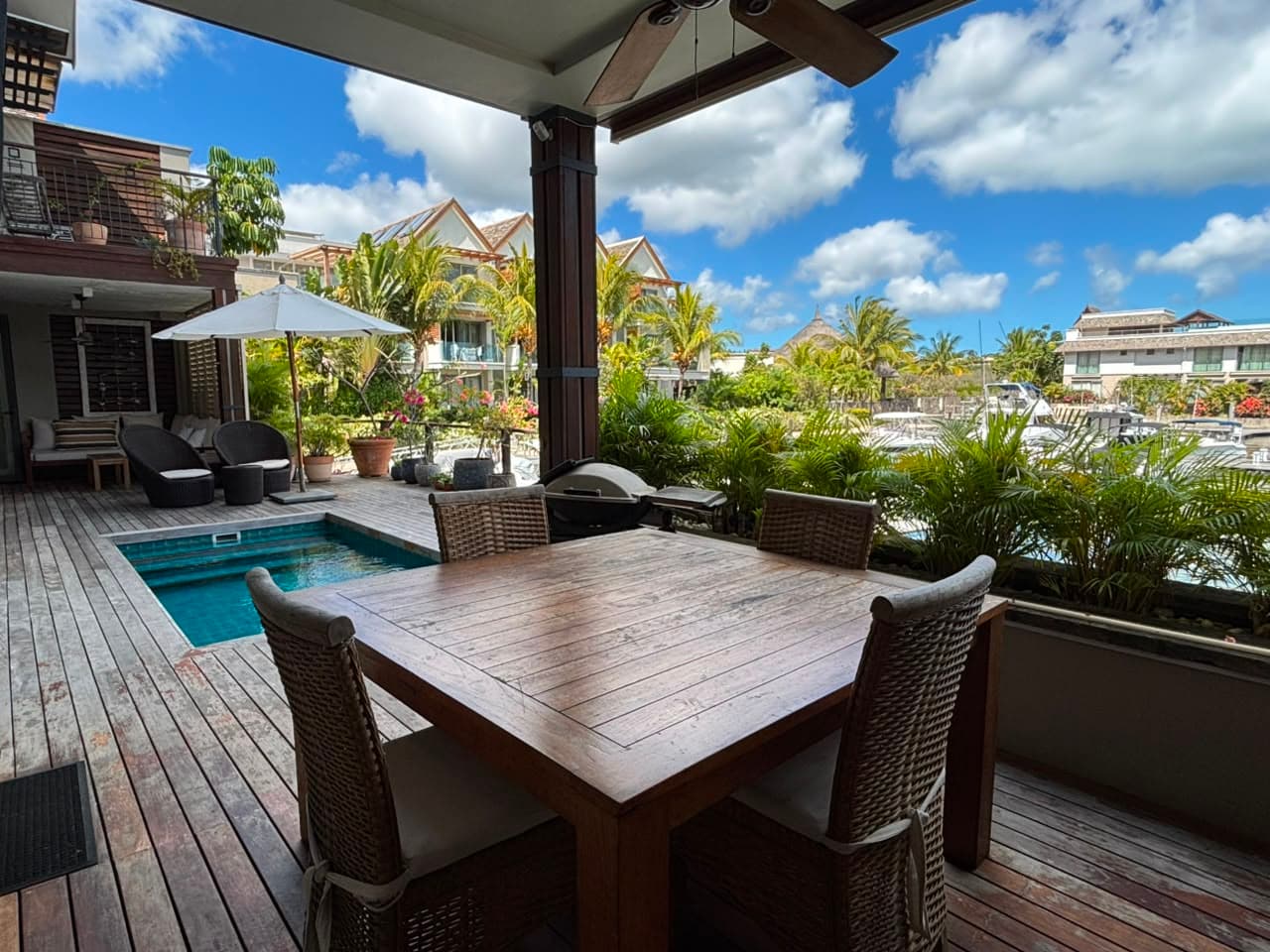
FOR RENTExpat
Rs450K/mo
Riviere Noire · West
Ultimate Marina Lifestyle – Luxury Waterfront Residence, Private Mooring & Boat
44


Looking for a house in Tamarin, Mauritius? This plain-English guide covers the market, buying process, costs, and how a property finder service can help.
Tamarin is a coastal village on the west coast of Mauritius that has shifted, over the past decade, from a quiet surf spot into one of the island's most sought-after residential addresses. Buying a house in Tamarin means entering a market that is active, internationally competitive, and governed by rules that differ meaningfully from those in the UK, Europe, or South Africa. This guide explains what to expect, the market conditions, the legal framework, the costs, and how a local property finder service can shorten your search considerably.
Tamarin sits between the Black River mountains and the Indian Ocean, giving it a distinct microclimate that is drier and sunnier than the east coast for much of the year. The village has a relaxed, community-oriented character and is within easy reach of Tamarin Bay, Black River, and the Rivière Noire district's hiking trails.
For foreign buyers, several practical factors reinforce the lifestyle appeal:
Mauritius law permits foreign nationals to purchase residential property, but only within specific approved frameworks. A house in Tamarin that sits outside a designated scheme, such as a standard freehold plot, cannot be purchased by a non-citizen without special approval, which is rarely granted.
The frameworks most relevant to buyers looking at Tamarin are:
If you are looking at a house in Tamarin that is not within one of these schemes, you will need to verify its eligibility before proceeding. A qualified local notary and a property finder with specific west-coast experience are both essential at this stage.
Prices in Tamarin vary significantly depending on whether the property is within a gated PDS estate or is a freehold property accessible only to citizens and residents.
Within PDS/RES estates near Tamarin:
Freehold houses (citizen/resident buyers only):
Beyond the purchase price, buyers should budget for:
A property finder service acts as a buyer's representative, sourcing properties that match your criteria, coordinating viewings, and guiding you through due diligence and negotiation. This is distinct from a standard estate agency, which represents the seller.
For buyers searching remotely, from the UK, France, South Africa, or elsewhere, a property finder is often the most efficient way to approach the Tamarin market. The service typically covers:
Property finder fees in Mauritius are not standardised, so it is worth asking any service provider to set out their pricing in writing before you engage. Common models include:
Some services include the finder fee within the seller's agency commission structure, meaning the buyer pays nothing directly. Confirm this arrangement explicitly, as it can affect whose interests the finder is truly representing.
The Tamarin property market is active enough that you will encounter a range of agents, developers, and intermediaries. When evaluating any service, whether a property finder, an agent, or an advisory platform, look for:
Reviews and testimonials from previous clients are a useful starting point, but direct conversation, asking specific questions about process, pricing, and past transactions, will tell you more than any written endorsement.
Hand-picked
Riviere Noire · West

Tamarin · West


Baie du Cap · South

Tamarin · West

Baie du Cap · South

Beau Champ · East
Explore by region
Explore the site
Market updates, buying guidance and the best new listings, straight to your inbox.
Mauritius Real Estate · 16 Oct 2026
Everything you need to know about house rental in Mauritius: costs, locations, lease rules, and how to find the right property. Updated guide for…
Mauritius Real Estate · 16 Oct 2026
Explore the west coast of Mauritius: top neighbourhoods, property market, beaches, lifestyle, and what foreign buyers need to know before purchasing.
Mauritius Real Estate · 15 Oct 2026
Seen our properties on PropertyCloud? How the listings match, what you get searching with us directly, and the essentials of buying in Mauritius.
Mauritius Real Estate · 13 Oct 2026
Where to find a business park in Mauritius, what leasing or buying costs, and how foreign companies set up. Covers Ebène, Grand Baie, Pailles and…
Mauritius Real Estate · 12 Oct 2026
A practical guide to business insurance in Mauritius for property owners, landlords, and investors. Covers key cover types, costs, and what to check…
Mauritius Real Estate · 10 Oct 2026
Everything you need to know about getting a skipper license in Mauritius, from exam requirements to costs, plus how it connects to waterfront living.
Browse our current listings or speak to an agent.


