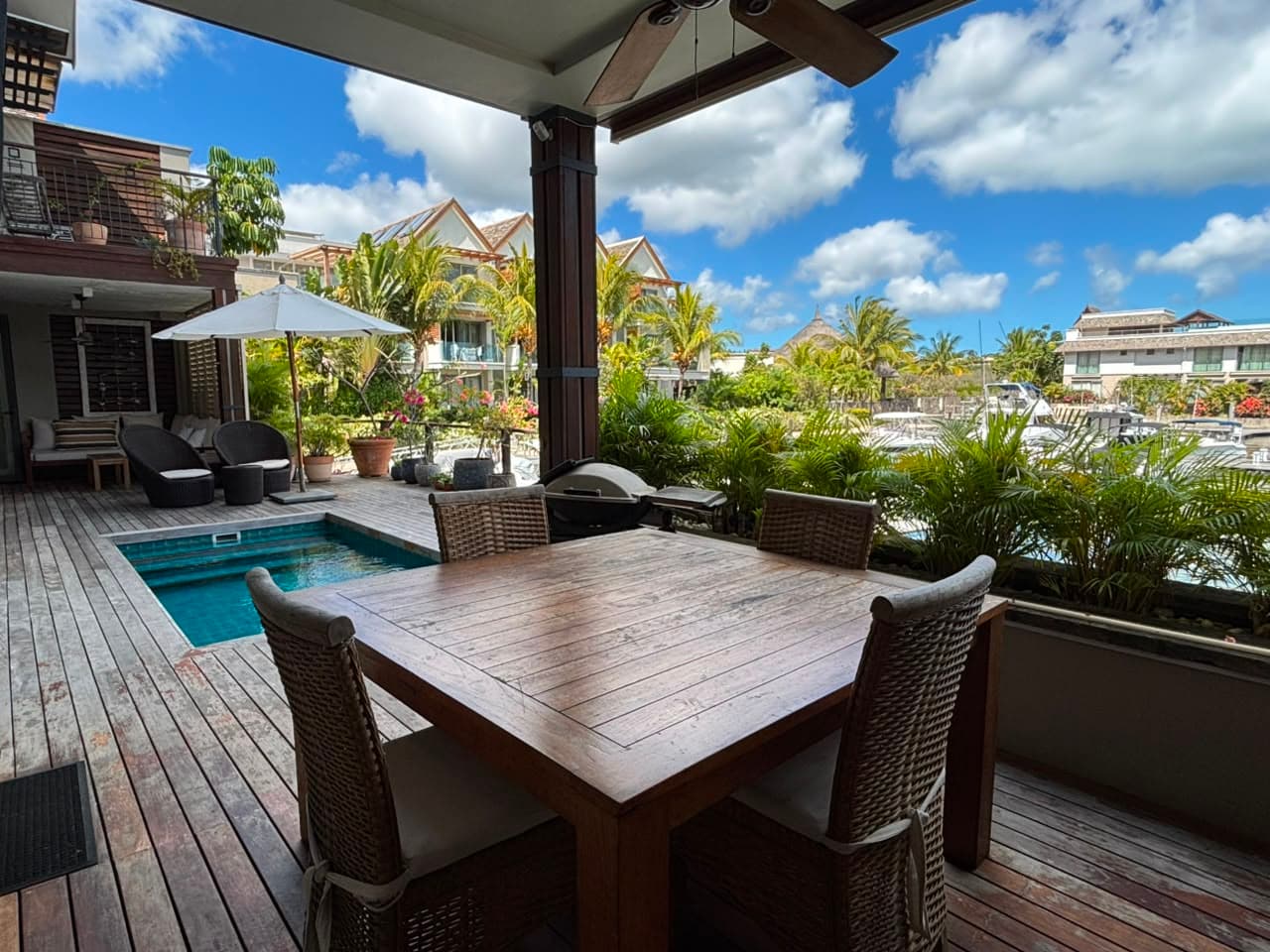
FOR RENTExpat
Rs450K/mo
Riviere Noire · West
Ultimate Marina Lifestyle – Luxury Waterfront Residence, Private Mooring & Boat
44


Discover the Mauritius lifestyle, climate, cost of living, culture, and property options, a practical guide for foreign buyers and relocating professionals.
The Mauritius lifestyle is defined by a moderate tropical climate, a genuinely multicultural society, low crime rates relative to comparable island nations, and a cost of living that, depending on your choices, can sit well below London, Paris, or Cape Town. For internationally mobile buyers and relocating professionals, this combination makes Mauritius one of the more practical relocation destinations in the Indian Ocean region, not just one of the more scenic ones.
This guide covers what life in Mauritius genuinely involves: the climate, the culture, the costs, the healthcare system, the international schooling landscape, and how property search tools can help you find the right home before you arrive.
Mauritius sits roughly 2,000 kilometres off the south-east coast of Africa. The island is 65 kilometres long and 45 kilometres wide, which means most locations are within 30 to 45 minutes of each other by car.
The climate divides into two broad seasons:
Where you buy on the island matters. The west coast, Grand Baie, Tamarin, Black River, is popular with expatriates partly because it receives the most sunshine hours. The east coast offers a quieter pace. The central plateau towns of Curepipe and Rose Hill sit at higher elevation and are noticeably cooler.
Mauritius has no indigenous population. The island was uninhabited until the 17th century, and its current population of roughly 1.3 million descends from African, Indian, Chinese, and European settlers. The result is a society that is pluralistic by necessity, not by policy.
English is an official language and is widely used in business, government, and education. French is the dominant language of everyday conversation among Mauritians. Kreol Morisien, a French-based creole, is the mother tongue of most residents. Most professionals switch comfortably between all three.
Religious and cultural festivals are observed across Hindu, Muslim, Christian, and Chinese traditions, and public life accommodates this diversity without significant friction. For foreign residents, this translates into a social environment that is generally welcoming and easy to navigate.
The cost of living in Mauritius is lower than most Western European cities and broadly comparable to mid-tier South African cities, with some important caveats.
Where costs are lower than Europe:
Where costs are comparable or higher:
A professional couple without children can live comfortably on a monthly budget of USD 3,000 to USD 5,000, including rent in a mid-range property. Families with children in international schools should budget considerably more.
Mauritius operates a public healthcare system that is free at the point of use for residents, including foreign nationals with the appropriate residency status. The public system handles routine and emergency care adequately, though wait times and facility standards vary.
Most expatriates use private healthcare, which is of a high standard in the main urban centres. Clinics such as Wellkin Hospital and C-Care operate to international standards, and many Mauritian doctors have trained in France or the United Kingdom. International health insurance is advisable and widely available.
For serious or highly specialised procedures, medical evacuation to South Africa, India, or France is common and is typically covered by comprehensive international health policies.
Mauritius has a well-developed private international school sector. Schools offering the British curriculum (IGCSE and A-Level), the French Baccalaureate, and the International Baccalaureate are available, primarily in the north and west of the island.
For families relocating from the UK, South Africa, or continental Europe, the transition into an international school is generally straightforward. Places at the most established schools can be competitive, and early enrolment enquiries, ideally six to twelve months before your intended move date, are advisable.
The local state school system follows a curriculum influenced by the British model and conducts examinations through Cambridge Assessment International Education.
Foreign nationals can purchase property in Mauritius through several legal frameworks, including the Property Development Scheme (PDS), the Smart City Scheme, and the Ground Floor Apartment Scheme (G+2). Each framework sets minimum investment thresholds and determines eligibility for a Mauritius Occupation Permit or Residence Permit by Investment.
The property search process typically begins online, well before a buyer visits the island. A reliable property platform allows you to filter by scheme type, location, price range, and property type, giving you a clear picture of what the market offers before you engage an agent or travel.
When evaluating any property search service, the questions worth asking are straightforward: What listings does it cover? How current is the data? Does it clearly explain the legal framework applicable to each property? A good platform answers these questions directly rather than requiring you to request a brochure.
Pricing on property platforms in Mauritius varies. Some operate on a subscription model for agents; others are free to search for buyers. Understanding the cost structure of the platform you use helps you assess whether the listings are comprehensive or limited to paying agents only.
For buyers working through the process independently, a platform that combines search functionality with clear guidance on the PDS and Smart City processes, including typical costs, timelines, and documentation requirements, reduces the number of intermediary steps and helps you arrive at agent conversations better informed.
Purchasing a qualifying property in Mauritius can entitle the buyer, their spouse, and dependent children to a Mauritius Residence Permit. The current minimum investment threshold under the PDS is USD 375,000. This permit is valid for the duration of property ownership.
The process involves:
The full process from reservation to permit typically takes between three and six months, depending on the complexity of the transaction and the completeness of documentation submitted.
The Mauritius lifestyle is not a vague aspiration, it is a specific set of conditions: a stable political environment, English and French as working languages, a tax-efficient residency framework, good private healthcare, international schooling, and a climate that is genuinely pleasant for most of the year. For buyers who do the research, the transition is well-structured and the legal frameworks are clear.
The practical starting point is understanding the property market, what is available, under which scheme, at what price, and in which location. From there, the residency and lifestyle questions tend to answer themselves.
Hand-picked
Riviere Noire · West

Tamarin · West


Baie du Cap · South

Tamarin · West

Baie du Cap · South

Beau Champ · East
Explore by region
Explore the site
Market updates, buying guidance and the best new listings, straight to your inbox.
Mauritius Real Estate · 16 Oct 2026
Everything you need to know about house rental in Mauritius: costs, locations, lease rules, and how to find the right property. Updated guide for…
Mauritius Real Estate · 16 Oct 2026
Explore the west coast of Mauritius: top neighbourhoods, property market, beaches, lifestyle, and what foreign buyers need to know before purchasing.
Mauritius Real Estate · 15 Oct 2026
Seen our properties on PropertyCloud? How the listings match, what you get searching with us directly, and the essentials of buying in Mauritius.
Mauritius Real Estate · 13 Oct 2026
Where to find a business park in Mauritius, what leasing or buying costs, and how foreign companies set up. Covers Ebène, Grand Baie, Pailles and…
Mauritius Real Estate · 12 Oct 2026
A practical guide to business insurance in Mauritius for property owners, landlords, and investors. Covers key cover types, costs, and what to check…
Mauritius Real Estate · 10 Oct 2026
Everything you need to know about getting a skipper license in Mauritius, from exam requirements to costs, plus how it connects to waterfront living.
Browse our current listings or speak to an agent.


