FOR RENTExpat
Rs450K/mo
Riviere Noire · West
Ultimate Marina Lifestyle – Luxury Waterfront Residence, Private Mooring & Boat
44

Searching for property in Mauritius? This plain-English guide covers how to find, evaluate, and buy property in Mauritius as a foreign national.
Finding and buying property in Mauritius as a foreign national is a structured process with clear legal pathways, but only if you know which rules apply to you, which locations suit your goals, and which costs to expect before you sign anything. This guide covers all of that in plain terms, so you can move from research to decision with confidence.
Foreign nationals can legally own property in Mauritius, but only through specific government-approved frameworks. The main routes are:
Each scheme has its own eligibility conditions, approval process through the Economic Development Board (EDB), and residency implications. Buying outside these frameworks is not permitted for non-citizens.
Most buyers begin with an online property search, then follow up with in-person viewings or virtual tours arranged through a local agent.
A reliable property search platform for Mauritius will let you filter by:
When evaluating any listing, look beyond the headline price. Ask whether the figure is quoted in Mauritian rupees, euros, US dollars, or South African rand, and confirm whether it includes VAT, registration duty, and notary fees.
A well-structured listing on a Mauritius property platform should clearly state:
If a listing omits scheme information or ownership structure, treat that as a prompt to ask the agent directly before proceeding.
The purchase price is only part of the total outlay. Budget for the following additional costs:
| Cost Item | Typical Amount | |---|---| | Registration duty | 5% of purchase price | | Notary fees | 1–2% of purchase price | | EDB application fee | MUR 10,000–50,000 depending on scheme | | Agent commission | Usually 2–3%, paid by the seller in most cases | | Land Transfer Tax | Applicable in certain resale scenarios |
For a USD 500,000 property, total transaction costs commonly fall between USD 30,000 and USD 45,000. Some PDS developers absorb part of these costs as an incentive, always confirm in writing.
Buying a qualifying property in Mauritius (generally USD 375,000 or above in a PDS development) entitles the buyer and their immediate family to a Mauritius residence permit. This permit is valid as long as you own the property. It does not automatically grant citizenship, but it does allow you to live and work in Mauritius without a separate work permit.
Step 1, Property search and shortlisting Use a reputable platform or work with a licensed local agent to identify properties that match your budget, lifestyle, and investment criteria.
Step 2, Due diligence Your notary (notaire) will verify the title deed, confirm there are no encumbrances, and check that the development holds the necessary government approvals. Do not skip this step, even for new-build properties.
Step 3, Preliminary agreement (Contrat Préliminaire de Vente) This is a legally binding reservation contract. It typically requires a deposit of 10% of the purchase price. Read it carefully, it sets out the conditions under which you can withdraw and whether your deposit is refundable.
Step 4, EDB approval Your notary submits the application to the Economic Development Board on your behalf. Processing times vary but typically take four to eight weeks.
Step 5, Deed of Sale (Acte de Vente) Once EDB approval is granted, the notary prepares the final Deed of Sale. Both parties sign before the notary, transfer costs are paid, and the deed is registered at the Registrar-General's office. Ownership is formally transferred at this point.
Mauritius is a small island, roughly 65 kilometres long, but property values, lifestyle character, and buyer profiles vary considerably by region.
North (Grand Baie, Pereybère, Cap Malheureux) The most developed tourist corridor. Strong rental demand, active social scene, good infrastructure. Popular with European buyers and short-term rental investors.
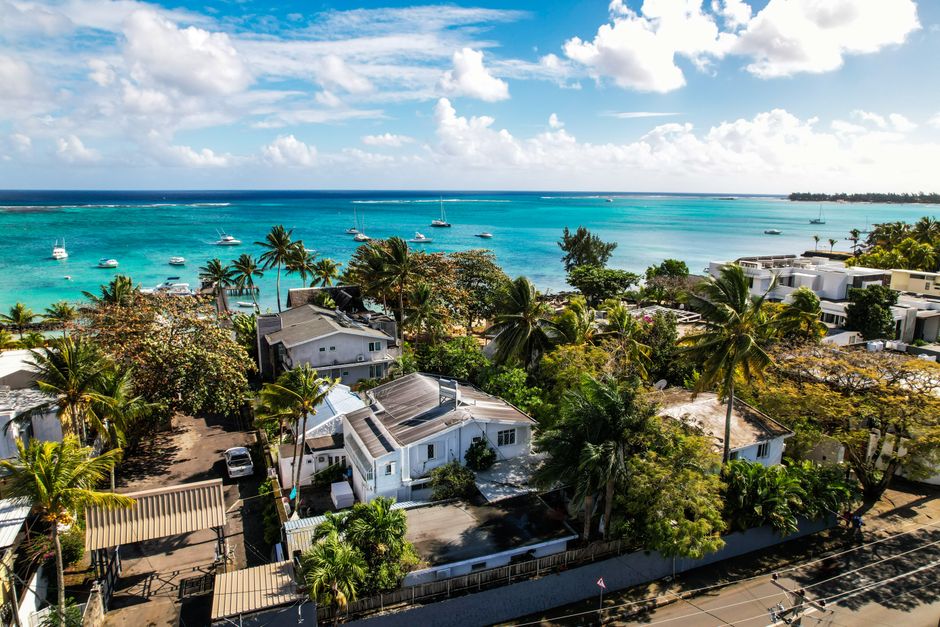
West (Tamarin, Black River, Rivière Noire) Favoured by South African buyers and outdoor enthusiasts. Quieter, with good surf, mountain access, and a growing expat community. PDS estates in this region have expanded significantly.
East (Beau Champ, Mahébourg, Belle Mare) Home to some of the island's most prestigious resort-integrated estates. Lower density, longer beaches, and a more secluded feel. Higher price points, strong capital appreciation history.
South (Souillac, Le Morne) Less developed commercially, more natural. Le Morne peninsula is a UNESCO World Heritage site. Limited supply of approved foreign-purchasable property.
A property search service for Mauritius should do more than display listings. Look for platforms that provide:
The quality of information on a platform reflects the quality of the agents using it. If listings are vague, prices are missing, or scheme details are absent, the platform may not be curated carefully enough to rely on for a significant financial decision.
Renting before committing to a purchase is a practical strategy, particularly if you have not yet spent extended time in the region you are considering. A three- to six-month rental in Tamarin or Grand Baie will tell you more about daily life, commute times, and neighbourhood character than any amount of online research.
Short-term furnished rentals are widely available and do not require EDB approval. Long-term unfurnished leases are also accessible to foreign nationals without restriction. Rental income earned by non-resident property owners is subject to Mauritius income tax, currently at 15%.
Mauritius property ownership is well-regulated and genuinely accessible to foreign buyers who follow the correct process. The key is knowing which framework applies to your situation before you commit to any agreement.
Hand-picked
Riviere Noire · West

Baie du Cap · South

Tamarin · West

Beau Champ · East

Tamarin · West

Baie du Cap · South
Explore by region
Explore the site
Browse our current listings or speak to an agent.