FOR SALEExpat
€1.0M
Baie du Cap · South
Bioclimatic Villa in Mauritius – 3-Bedroom Luxury Home with Private Pool
33

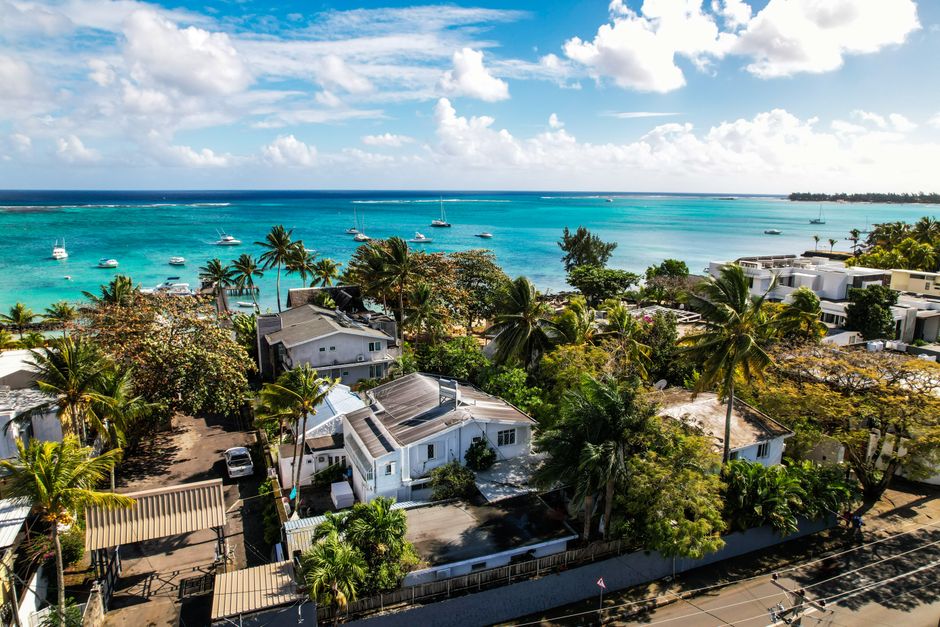
Explore real estate in Mauritius: buying property online, house rentals in Port Louis, office space, and top locations like Albion and Tombeau Bay.
Real estate in Mauritius covers a wide spectrum, from beachfront villas on the west coast to commercial office space in the capital and affordable family homes in the north. Whether you are looking to buy property in Mauritius online from abroad, rent a house in Port Louis, or secure office space for a regional headquarters, the market is well-regulated, internationally accessible, and more transparent than many first-time investors expect.
This guide covers the key locations, property types, and practical steps that matter most to foreign buyers and relocating professionals.
Mauritius has a stable legal system based on French civil law and English common law, a flat income tax rate of 15 percent, no inheritance tax, and a straightforward property registration process overseen by the Registrar-General. Foreign nationals can buy property through specific government-approved schemes, and the island's infrastructure, international schools, and healthcare facilities make it a credible long-term base rather than simply a holiday destination.
The combination of political stability, a growing financial services sector, and consistent demand from South African, British, French, and European buyers keeps the market active across all price points.
Port Louis is the capital and the centre of Mauritius's business activity. House rental in Port Louis suits professionals working in finance, shipping, or government who want to minimise commuting time. Rental demand here is consistent, and the area around Caudan Waterfront and the central business district also supports strong demand for office rent in Mauritius, particularly from companies establishing Indian Ocean regional operations.
Office space in Port Louis ranges from serviced co-working desks to full-floor corporate suites. Lease terms are typically negotiable, and landlords are accustomed to dealing with international tenants.
Albion sits on the western coastline, roughly 20 kilometres from Port Louis. The area is known for its calm lagoon, consistent trade winds, and a growing residential community that attracts both local families and foreign residents. When people explore the beauty of Albion, they find a quieter alternative to the more developed resort corridors of Grand Baie or Tamarin, with good road access to the capital and proximity to Flic en Flac's amenities.
Property types in Albion include standalone villas, small residential developments, and plots with sea views. It is a practical choice for buyers who want coastal living without the premium pricing of the most established resort zones.
Tombeau Bay is located on the north-west coast, between Port Louis and the popular northern resort strip. The bay itself is sheltered and calm, and the surrounding area has seen gradual residential development over the past decade. For buyers looking at new property listings in Mauritius, Tombeau Bay offers a middle ground: closer to the capital than Grand Baie, with lower entry prices than the established resort areas, and genuine potential for value growth as infrastructure in the corridor improves.
The area suits buyers who want a permanent residence within commuting distance of Port Louis, or investors seeking rental yield from the growing number of professionals relocating to the island.
Riviere Noire, also called Black River, is on the south-west coast and is one of the most historically and ecologically significant areas of Mauritius. The Black River Gorges National Park, the island's largest nature reserve, sits directly inland. The coastline here is less developed than the north, which is precisely why it appeals to buyers seeking privacy and space.
Chateau de Riviere Noire is one of the most historically significant colonial-era estates in Mauritius. The property dates to the French colonial period and was associated with the Rivalland family, one of the island's prominent sugar-planting dynasties. The estate reflects the architecture and land-use patterns of 18th and 19th century Mauritius, when sugar cultivation shaped the island's economy, its social structure, and its landscape.
The chateau itself is a rare surviving example of Creole colonial architecture, characterised by wide verandas, timber construction, and a layout designed to manage the tropical climate before mechanical cooling existed. Unlike many colonial structures that were demolished or heavily modified during the 20th century, Chateau de Riviere Noire has retained much of its original character, making it a reference point for historians, architects, and heritage enthusiasts studying Mauritian history.
For property buyers, the Riviere Noire area represents a location with deep historical roots and a strong sense of place. Prestige villas and IRS or PDS scheme developments in this corridor attract buyers who value that context alongside the natural environment.
Buying property in Mauritius online is a practical starting point for international buyers who cannot travel immediately. The process typically works as follows:
Foreign nationals must purchase through an approved scheme (such as the Property Development Scheme or the Ground Plus Two scheme for apartments) unless they are Mauritian citizens or hold permanent residency. Your notary will confirm which route applies to the specific property you are considering.
New property listings in Mauritius vary considerably in quality, completeness, and legal status. When reviewing any listing, check for:
Working with a property adviser who has access to a broad and regularly updated listing database reduces the risk of missing suitable options or pursuing properties with unresolved legal issues.
Companies establishing or expanding in Mauritius typically look at office space in Port Louis, Ebene Cybercity (the island's designated technology and financial services hub), or Grand Baie for smaller regional offices. Rental rates vary by location, fit-out standard, and lease length.
Ebene offers modern Grade A office buildings with reliable power and fibre connectivity, making it the preferred choice for financial services firms, technology companies, and international holding structures. Port Louis suits businesses that need proximity to the port, customs, and government ministries. Lease terms are generally two to five years, with options to renew.
Real estate in Mauritius is accessible, legally structured, and supported by a professional services ecosystem that is used to working with international clients. The key points to carry forward are:
Hand-picked
Baie du Cap · South

Tamarin · West

Riviere Noire · West

Beau Champ · East

Riviere Noire · West

Baie du Cap · South
Explore by region
Explore the site
Browse our current listings or speak to an agent.