FOR RENTExpat
Rs450K/mo
Riviere Noire · West
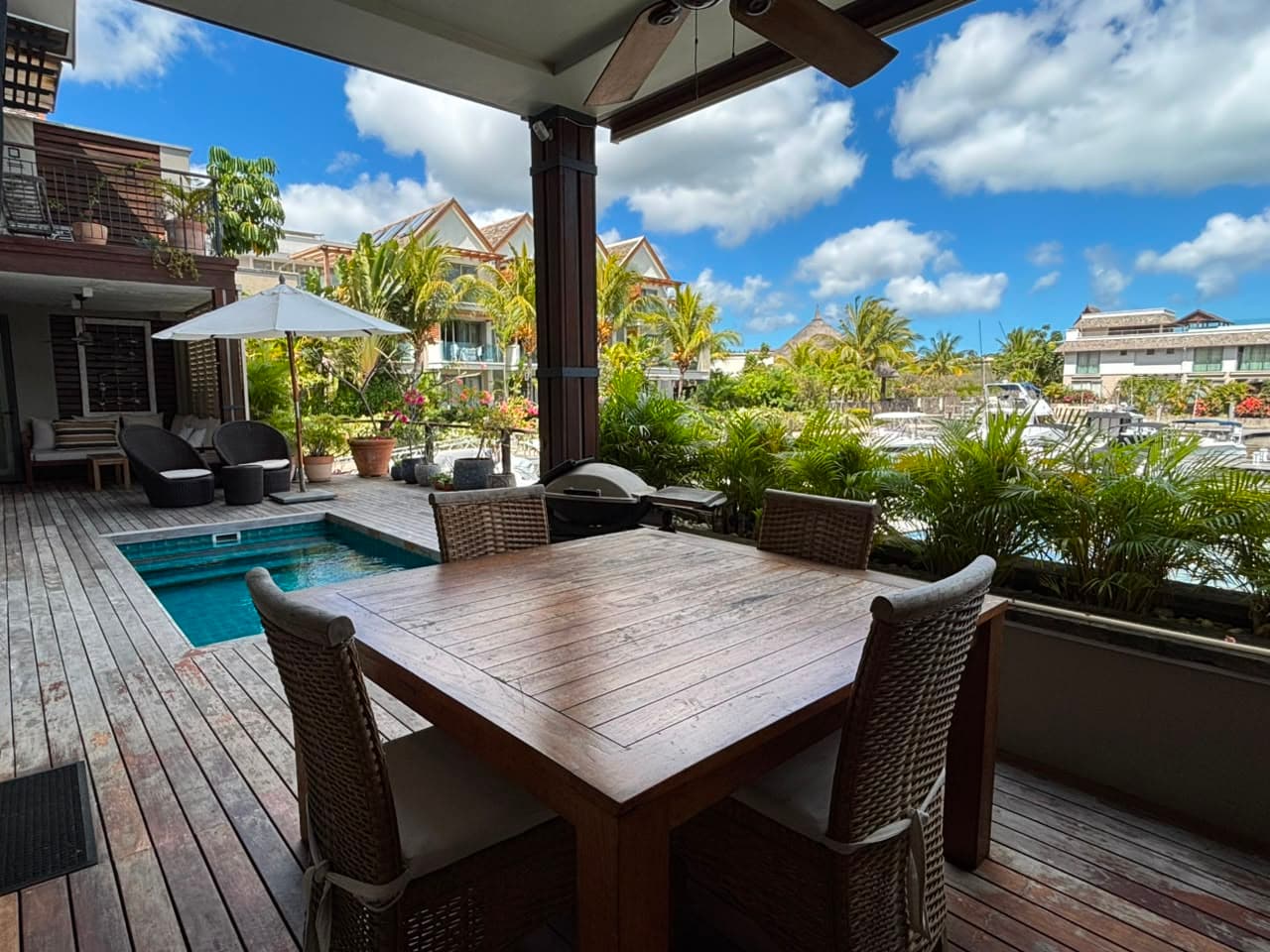
Ultimate Marina Lifestyle – Luxury Waterfront Residence, Private Mooring & Boat
44

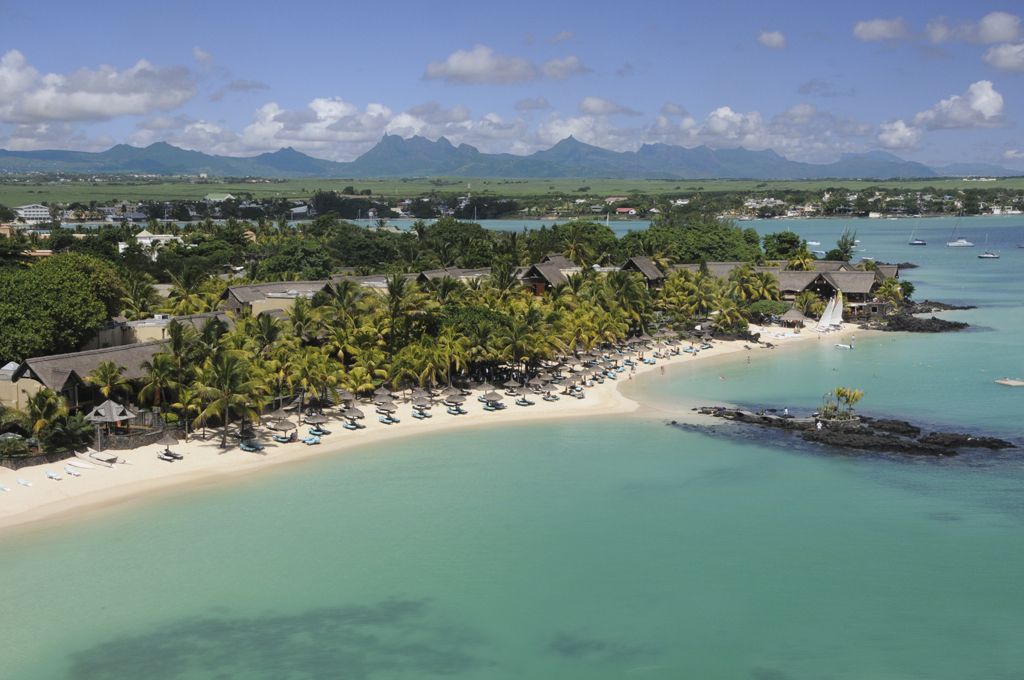
Explore beach villas in Mauritius for sale or rent. Learn about prime coastal locations, foreign buyer rules, duties, and what to expect at every step.
A beach villa in Mauritius sits at the intersection of lifestyle and investment. Whether you are looking to buy a permanent coastal home, acquire a rental-income property, or simply rent for a season, the market offers a wide range of options across the island's most desirable shorelines. Foreign nationals can purchase legally under several government-approved schemes, and the process, while structured, is straightforward once you understand the framework. This guide covers the key coastal locations, what to expect on price and product, and the legal and tax context that applies to non-citizens.
The term "beach villa" in Mauritius typically refers to a freestanding residential property with direct beach access or a short walk to the shore, a private garden or pool, and a level of privacy that apartments and townhouses do not offer. These properties sit within gated estates or stand on private plots along the coast. They range from compact three-bedroom houses in the north to large six-bedroom oceanfront residences in the west and south.
Beach villas differ from inland villas in one important way: location commands a significant price premium, and that premium tends to hold over time because beachfront land in Mauritius is finite and tightly regulated. Properties on or near the Pas Geometriques (the coastal strip managed by the state) are subject to specific rules, so buyers should always verify land status with a Mauritian notary before making an offer.
Grand Baie is the most active residential and lifestyle hub on the island. The lagoon here is calm, the amenities are extensive, and the area attracts a strong mix of European, South African, and local buyers. Villas in Grand Baie and the surrounding villages of Pereybere, Cap Malheureux, and Pointe aux Canonniers tend to sell quickly. This is also where the short-term rental market is most liquid, making north coast beach houses a practical choice for buyers who want rental income when they are not in residence.
The west coast has a quieter, more residential character. Tamarin and Black River draw families and long-term residents who want space and a slower pace without sacrificing access to beaches and restaurants. Villas here are often larger and sit on bigger plots than equivalent properties in the north. The Riviere Noire district also has some of Mauritius's most established PDS and Smart City estates, which are the legal frameworks through which foreign nationals most commonly acquire beachside property.
The south coast is less developed and more dramatic in landscape. Bel Ombre has a significant integrated resort with villas available under approved schemes. Buyers who prioritise seclusion over convenience tend to gravitate here. Prices per square metre are generally lower than the north or west, but the trade-off is distance from international schools, the airport, and Port Louis.
Belle Mare is home to some of the island's finest beach stretches. Several large resort-integrated estates operate here, offering villas with hotel services, rental management programmes, and access to private beach clubs. This model suits buyers who want a hands-off investment with professional management in place.
Foreign nationals cannot purchase freehold property in Mauritius freely. Acquisition must happen through one of several government-approved schemes. The two most relevant for beach villas are the Property Development Scheme (PDS) and the Smart City Scheme.
Property Development Scheme (PDS): This is the primary route for foreigners buying residential property. PDS developments are mixed-use estates that include villas, apartments, and communal facilities. The minimum purchase price that qualifies a non-citizen for a residence permit is USD 375,000. Buying at or above this threshold grants the purchaser and their dependants the right to reside in Mauritius for as long as they hold the property.
Smart City Scheme: Smart Cities are larger integrated developments combining residential, commercial, and leisure components. Foreign buyers can acquire property within a Smart City under similar conditions to PDS, and the same USD 375,000 threshold applies for residence permit eligibility.
G+2 Scheme: This allows foreigners to buy apartments in buildings of ground floor plus at least two upper floors. It is less relevant for standalone beach villas but worth knowing if a coastal apartment is under consideration.
Outside these schemes, foreigners generally cannot purchase property in Mauritius without specific government authorisation, which is rarely granted for residential acquisitions.
Under the Finance Act 2026, which came into force on 13 August 2026, non-citizens buying under PDS, Smart City, RES, or G+2 pay the standard 5% registration duty as the buyer. The seller pays a 5% land transfer tax. An additional 10% duty applies to the seller only in the specific case of G+2 homes located on State land or Pas Geometriques sold to a non-citizen; this does not affect the buyer's liability.
An earlier rise in duty to 10% for foreign buyers, introduced under the Finance Act 2025, was repealed. Buyers should not rely on any source that still quotes 10% as the standard buyer duty.
First-time buyers who are Mauritian citizens or residents benefit from registration duty relief on the first MUR 3 million for bare land or MUR 6 million for a house or apartment, but this relief does not generally apply to foreign nationals purchasing through the approved schemes.
Always confirm the current duty structure with the Mauritius Revenue Authority (MRA) and the Economic Development Board (EDB) before signing any agreement, as tax legislation can change with each annual Finance Act.
No capital gains tax: Mauritius does not levy capital gains tax. If you sell your beach villa for more than you paid, the profit is not taxed at the point of sale. This is a meaningful advantage for long-term investors.
No inheritance or estate tax: There is no inheritance tax or estate duty in Mauritius. Property can pass to heirs without a tax charge on the transfer.
Personal income tax on rental income: If you rent out your villa and are tax-resident in Mauritius, rental income forms part of your taxable income. The personal income tax rate is progressive: 0% on the first MUR 500,000 of annual income, 10% on MUR 500,001 to MUR 1,000,000, 20% on MUR 1,000,001 to MUR 12,000,000, and 35% on income above MUR 12,000,000. These bands apply from the income year starting 1 July 2026. Non-residents receiving Mauritius-source rental income should take advice on their specific position from a qualified Mauritian tax adviser.
Not every visitor or relocating professional is ready to buy. Renting a beach villa in Mauritius is a practical way to experience a location before committing capital, or simply to enjoy the island for a fixed period without ownership responsibilities.
Short-term beach house rentals (one week to three months) are widely available through estate agents and rental management companies, particularly in Grand Baie, Tamarin, and Belle Mare. A three-bedroom villa with a pool and beach proximity will typically command a weekly rate that reflects both the season and the specific location. High season runs from June to September and over the December to January holiday period, when demand and prices peak.
For those relocating to Mauritius on an Occupation Permit or Residence Permit, long-term villa rentals (six months to two years or more) offer flexibility. The west coast and north coast have the deepest inventory of long-term rental villas. Lease agreements in Mauritius are typically governed by the Civil Code and should be reviewed by a local lawyer before signing. Rent is usually quoted in Mauritian Rupees for local landlords, though some estates quote in Euros or US Dollars for international tenants.
Check whether the rental price includes maintenance of the pool and garden, which is standard in most managed estates but not universal in private rentals. Confirm the notice period, the deposit terms (usually one to three months), and whether the property is furnished to a standard that suits your needs. Ask specifically about air conditioning coverage, generator backup, and internet connectivity, as these vary significantly between properties.
Prices across the market span a wide range, and quoting specific figures risks becoming outdated quickly. As a general orientation:
Beyond the purchase price, buyers should budget for registration duty (5% of the purchase price), notary fees, and annual property taxes (taxe fonciere), which are modest by international standards. Ongoing costs in managed estates include homeowners association fees that cover security, landscaping, and shared facility maintenance.
For current listings and indicative price ranges, browsing an active property portal gives a more accurate picture than any published guide.
See the FAQ section below for direct answers to the most common questions about beach villas in Mauritius.
The right location depends on your primary purpose. If rental yield and resale liquidity matter most, the north coast around Grand Baie has the most active market. If lifestyle and family living are the priority, the west coast offers more space and a calmer environment. If you want seclusion and are comfortable with a longer drive to amenities, the south or east coast may suit you better.
Visiting each area before committing is strongly recommended. The character of a coastal village changes significantly between the north, west, south, and east, and no description fully substitutes for spending time there.
Hand-picked
Riviere Noire · West

Tamarin · West


Baie du Cap · South

Baie du Cap · South

Riviere Noire · West
Tamarin · West

Beau Champ · East
Explore by region
Explore the site
Market updates, buying guidance and the best new listings, straight to your inbox.
Mauritius Real Estate · 28 Oct 2026
Find the best Mauritius newspaper sources for today's news. A complete guide to print and online outlets for expats, investors and relocating…
Mauritius Real Estate · 28 Oct 2026
Discover when Mauritius's dry season runs, what weather to expect month by month, and why it matters for property viewings and relocation planning.
Mauritius Real Estate · 22 Oct 2026
Browse apartments for sale and rent in Pereybere, Mauritius. Neighbourhood guide, buying tips, foreign ownership rules, and price expectations for…
Mauritius Real Estate · 22 Oct 2026
Discover which areas in Mauritius have the most affordable apartments to rent or buy, from Port Louis to Flacq, with practical tips for every budget.
Mauritius Real Estate · 22 Oct 2026
Everything you need to know about Plaine Magnien, Mauritius: location, lifestyle, amenities, property market and what it's like to live in this…
Mauritius Real Estate · 22 Oct 2026
Explore villa rental options in Mauritius by area, style, and budget. Understand the rental market, key locations, and what to expect before you sign.
Browse our current listings or speak to an agent.


