FOR RENTExpat
Rs450K/mo
Riviere Noire · West
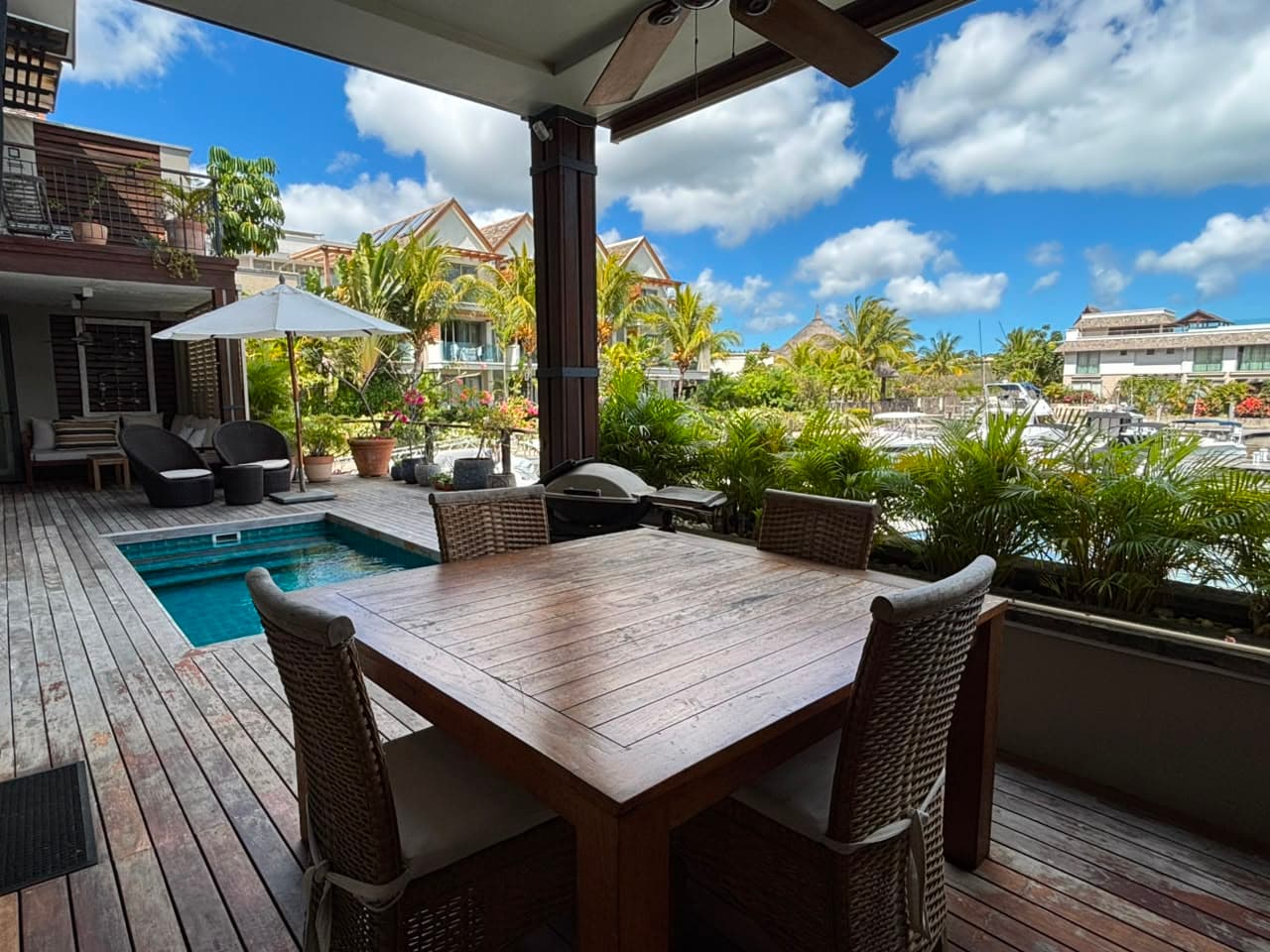
Ultimate Marina Lifestyle – Luxury Waterfront Residence, Private Mooring & Boat
44450m²


A practical guide to business setup in Mauritius: company structures, costs, tax rates, Occupation Permits, and how to get started with the EDB.
Mauritius has built one of Africa's most accessible business environments, combining a straightforward company registration process, a competitive corporate tax rate, and a legal system rooted in both English common law and the French civil code. For foreign investors and relocating professionals, the island offers a rare combination: full foreign ownership is permitted in most sectors, there is no capital gains tax, and a single regulatory body, the Economic Development Board (EDB), acts as the primary point of contact for investors. This guide explains how business setup in Mauritius works in practice, from choosing a structure to obtaining the permits you need to live and work here.
The Companies Act 2001 governs most business vehicles in Mauritius. The structures you are most likely to consider as a foreign investor are:
A GBC is a company incorporated in Mauritius that is tax resident here and conducts business internationally. It is the structure most commonly used by investment holding companies, fund managers, and businesses with cross-border operations. A GBC must have at least two directors who are resident in Mauritius, maintain a local registered office, and demonstrate genuine economic substance. It is regulated by the Financial Services Commission (FSC).
The GBC is the vehicle that gives access to Mauritius's network of Double Taxation Avoidance Agreements (DTAAs), which covers more than 40 countries including India, South Africa, France, the United Kingdom, and several other African states. This makes it particularly useful for structuring investments into Africa or Asia.
A domestic company operates primarily within Mauritius and is the standard vehicle for businesses serving the local market, from retail and hospitality to professional services and construction. It can be wholly foreign-owned in most sectors. Registration is handled through the Registrar of Companies.
An Authorised Company is incorporated in Mauritius but is tax resident outside Mauritius. It is used when the business is managed and controlled from abroad and has no intention of claiming treaty benefits. It pays a flat annual fee rather than corporate income tax on foreign-source income, but it cannot access the DTAA network.
A foreign company can register a branch in Mauritius rather than incorporating a new entity. The branch is not a separate legal person; the parent company remains liable. This can be quicker to set up but is less commonly used for long-term operations.
The process is straightforward and can often be completed within a few working days for a standard domestic company.
For a GBC, the process runs through a licensed Management Company rather than directly through the Registrar, and the FSC must issue a licence before the company can operate. This adds time, typically two to four weeks, and ongoing compliance costs.
The standard corporate income tax rate is 15%, applied to net profits. There is no capital gains tax, so gains on the disposal of shares, property, or other assets are not taxed at the corporate level. Dividends paid to shareholders are also not subject to withholding tax in most circumstances.
Certain sectors benefit from reduced rates or exemptions. Companies in the freeport zone, export-oriented manufacturers, and qualifying innovative companies may access partial exemptions or accelerated depreciation. The EDB publishes the current list of incentives.
Personal income tax in Mauritius is progressive. For the income year beginning 1 July 2026, the rates are:
The old 15% flat rate that was widely cited for many years no longer applies. Business owners drawing a salary or dividend from their Mauritian company should model their personal tax position using the progressive scale above. Confirm the current thresholds with the MRA before filing, as the Finance Act can adjust them annually.
Mauritius levies no capital gains tax and no inheritance or estate tax. This is a material advantage for holding structures, succession planning, and long-term investment vehicles.
Yes, in the majority of sectors. Mauritius operates an open investment policy and does not impose local partnership requirements for most industries. Exceptions exist in a small number of protected sectors, including sugar production and some areas of retail trade, where foreign participation may be restricted or require additional approval. The EDB maintains a current list of restricted activities.
Registering a company does not automatically give you the right to reside in Mauritius. If you intend to live here and run your business, you will need an Occupation Permit (OP).
The Investor OP is designed for foreign nationals who own and manage a business in Mauritius. The key requirements are:
The permit is valid for 10 years and is renewable. It covers the permit holder and can be extended to dependants under a Dependant's Permit.
If you are employed by a Mauritian business rather than owning it, the Professional OP applies. The minimum monthly salary is MUR 50,000, harmonised across all sectors. The permit is also valid for 10 years and renewable.
Freelancers and sole traders who do not fit neatly into the Investor or Professional categories can apply for a Self-Employed OP. This requires demonstrating a viable business activity and meeting income thresholds set by the EDB.
Once your business is operating, you will need to manage a set of recurring obligations:
For GBCs, substance requirements must be maintained continuously. The FSC can revoke a licence if a company no longer demonstrates genuine management and control from Mauritius.
Costs vary significantly by structure and sector, but the following gives a realistic picture for a small to medium foreign-owned business:
Several structural advantages make Mauritius a credible choice beyond its geography:
If you are seriously considering business setup in Mauritius, the most productive sequence is:
Rules, fees, and thresholds in Mauritius are reviewed with each annual Finance Act. Always verify current figures directly with the EDB (edbmauritius.org) and the MRA (mra.mu) before making commitments.
Hand-picked
Riviere Noire · West
Baie du Cap · South

Riviere Noire · West

Baie du Cap · South

Tamarin · West
Beau Champ · East
Explore by region
Explore the site
Market updates, buying guidance and the best new listings, straight to your inbox.
Mauritius Real Estate · 17 Nov 2026
Buy or lease office commercial property in Mauritius: legal rules for foreign buyers, costs, finance options, and how to search the main business…
Mauritius Real Estate · 17 Nov 2026
Everything you need to know about Black River Business Park in Mauritius: location, office options, business setup rules, and property investment…
Mauritius Real Estate · 17 Nov 2026
Find a beachfront apartment in Mauritius. Compare coastal areas, understand foreign buyer rules, and explore rental and purchase options across the…
Mauritius Real Estate · 17 Nov 2026
Explore the key towns in Mauritius for property, relocation and lifestyle. Compare character, amenities and investment potential across the island.
Mauritius Real Estate · 16 Nov 2026
Everything you need to know about the Real Estate Agent Authority in Mauritius: licensing, registration, how to verify an agent, and how to set up a…
Mauritius Real Estate · 10 Nov 2026
Discover the key reasons South Africans relocate to Mauritius: tax structure, residency routes, safety, careers, and lifestyle. Practical facts from
Browse our current listings or speak to an agent.