FOR RENTExpat
Rs450K/mo
Riviere Noire · West
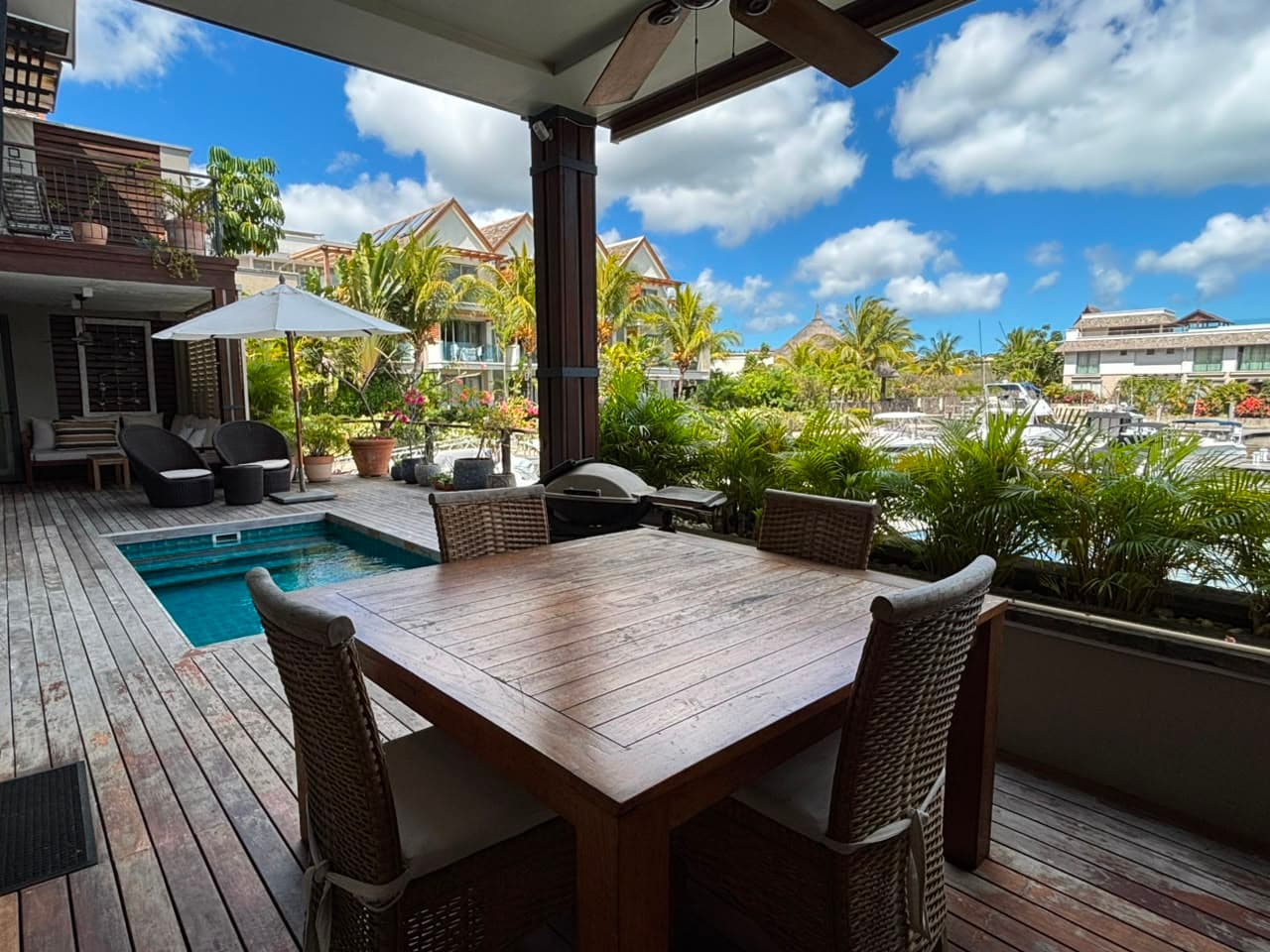
Ultimate Marina Lifestyle – Luxury Waterfront Residence, Private Mooring & Boat
44

A clear guide to Bedroom IRS properties in Mauritius, ownership rules, costs, process, and how to find the right unit as a foreign buyer.
A Bedroom IRS, short for Integrated Resort Scheme residential unit, is a freehold property within a government-approved resort development that foreign nationals are legally permitted to buy in Mauritius. The IRS framework, introduced in 2002 and later consolidated under the Property Development Scheme (PDS) regulations, allows non-citizens to acquire residential units provided the purchase price meets a minimum threshold set by the Economic Development Board (EDB). As of the most recent guidelines, that minimum is USD 375,000 (or its equivalent in another freely convertible currency).
The term "Bedroom IRS" is commonly used by agents and platforms to categorise listings by unit size, one-bedroom, two-bedroom, three-bedroom, and so on, within IRS-approved developments. Understanding both the bedroom configuration and the legal scheme it sits under is essential before you make an offer.
In an IRS development, the number of bedrooms directly affects three practical decisions:
The process for buying a Bedroom IRS property follows a structured sequence. Each stage has a defined legal purpose, and skipping steps is not possible under Mauritian property law.
Most internationally mobile buyers begin their search online before visiting Mauritius. A reliable property platform that lists verified IRS developments by bedroom count, location, and price range saves considerable time. When evaluating any platform, check whether listings are current, whether the agent details are verifiable, and whether the platform distinguishes between IRS, RES (Real Estate Scheme), and PDS properties, these are distinct legal categories with different rules.
Once you identify a Bedroom IRS unit, the developer or seller's agent will typically ask you to sign a Reservation Agreement and pay a reservation deposit, usually 1–2% of the purchase price. This holds the unit while your notary and legal adviser conduct due diligence: confirming title, checking for encumbrances, verifying EDB approval status, and reviewing the co-ownership rules of the development.
The preliminary agreement is a legally binding contract signed before a notary. At this stage, the buyer typically pays 10% of the purchase price. The agreement sets out the full terms of sale, the completion date, and any conditions precedent (such as mortgage approval or EDB notification).
All IRS purchases by non-citizens must be notified to the Economic Development Board. This is a notification requirement, not an approval process, the EDB does not have discretion to refuse a qualifying purchase, but the notification must be filed correctly and within the prescribed timeframe.
The final Deed of Sale (Acte de Vente) is executed before a notary and registered with the Registrar-General. At this point, the balance of the purchase price is paid, and ownership transfers to the buyer. The notary fees, registration duties, and land transfer tax are settled at this stage.
Foreign buyers frequently underestimate the transaction costs associated with an IRS purchase. The main items are:
Total buyer-side transaction costs typically run to 6–8% of the purchase price when notary fees, registration duty, and legal advice are combined.
A good property search platform for IRS buyers should do several things well. It should allow you to filter by scheme type (IRS, PDS, RES, Smart City), by bedroom count, by price range, and by location or region. Listings should include the EDB approval reference where available, the name of the managing agent or developer, and clear pricing in a consistent currency.
Platforms that aggregate listings from multiple agencies are particularly useful because they reduce the risk of missing a well-priced unit that only one agent holds. When assessing any platform, look at how recently listings were updated, whether sold properties are removed promptly, and whether contact details connect you directly to a licensed agent rather than an unverified intermediary.
User reviews of property platforms, whether written by buyers or agents, are worth reading critically. Positive reviews that mention specific features (accurate pricing, responsive agents, up-to-date listings) are more informative than general endorsements.
The IRS and PDS are related but distinct frameworks. The PDS, introduced in 2015, replaced both the IRS and RES for new developments, but many existing IRS developments continue to sell units under their original scheme approval. In practice, bedroom configurations available under IRS and PDS developments are broadly similar, both include apartments, penthouses, villas, and townhouses across the one-to-five-bedroom range.
The key difference is that PDS developments are required to allocate a portion of units to Mauritian buyers and must meet certain sustainability and community integration standards. For a foreign buyer focused on bedroom count and price, the practical experience of purchasing in an IRS versus a PDS development is similar. The legal steps and costs are essentially the same.
Hand-picked
Riviere Noire · West

Baie du Cap · South

Tamarin · West

Baie du Cap · South
Beau Champ · East

Riviere Noire · West
Explore by region
Explore the site
Market updates, buying guidance and the best new listings, straight to your inbox.
Mauritius Real Estate · 14 Oct 2026
Everything you need to know about house rental in Mauritius: costs, locations, lease rules, and how to find the right property. Updated guide for…
Mauritius Real Estate · 13 Oct 2026
Where to find a business park in Mauritius, what leasing or buying costs, and how foreign companies set up. Covers Ebène, Grand Baie, Pailles and…
Mauritius Real Estate · 12 Oct 2026
A practical guide to business insurance in Mauritius for property owners, landlords, and investors. Covers key cover types, costs, and what to check…
Mauritius Real Estate · 10 Oct 2026
Everything you need to know about getting a skipper license in Mauritius, from exam requirements to costs, plus how it connects to waterfront living.
Mauritius Real Estate · 9 Oct 2026
Find bungalows for rent in Mauritius: coastal, urban, and waterfront options explained, with inspection tips and neighbourhood comparisons.
Mauritius Real Estate · 9 Oct 2026
Explore the business park in Mauritius Riviere Noire, commercial real estate options, waterfront property, and financing routes for foreign buyers.
Browse our current listings or speak to an agent.