FOR RENTExpat
Rs450K/mo
Riviere Noire · West
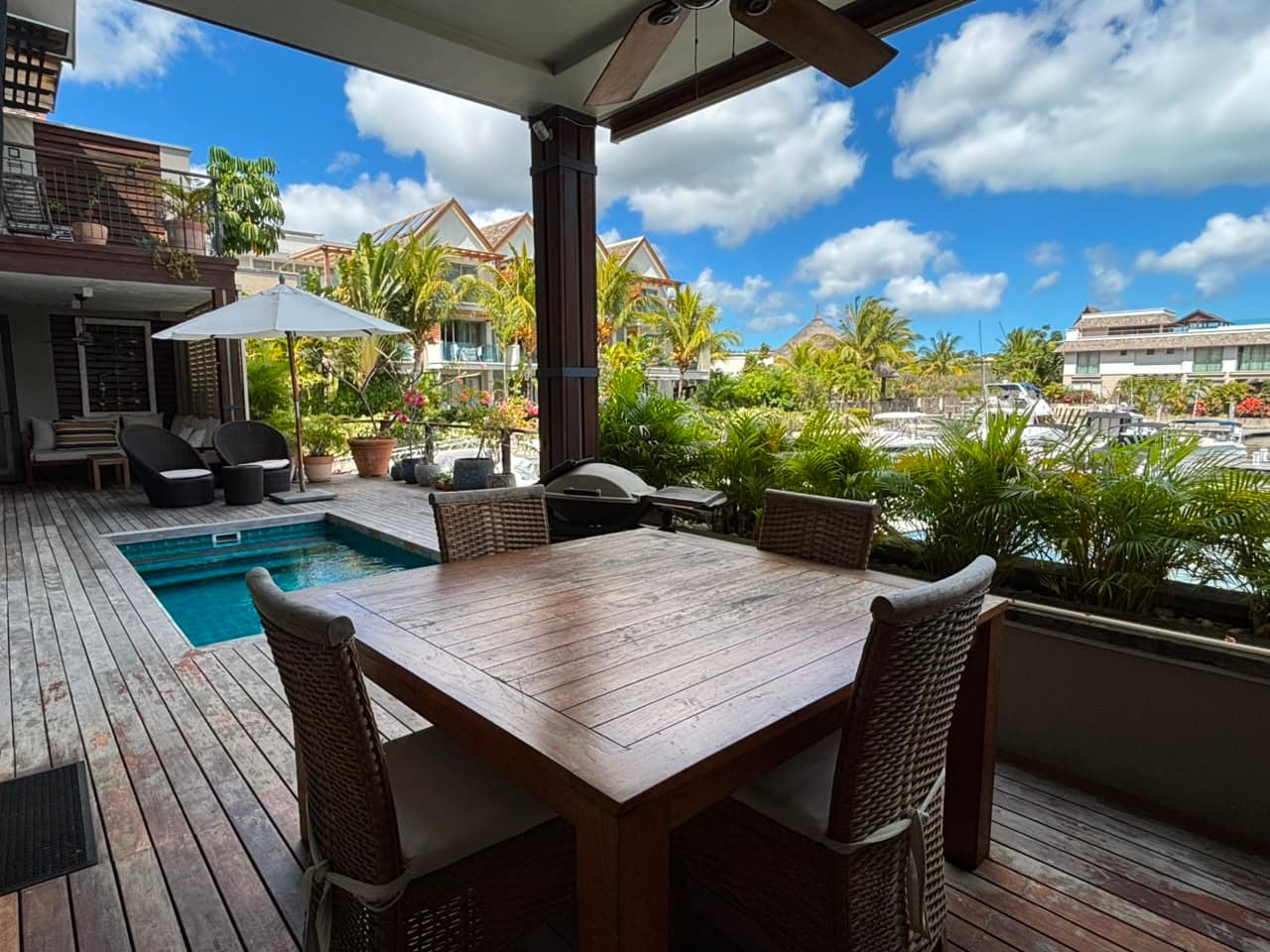
Ultimate Marina Lifestyle – Luxury Waterfront Residence, Private Mooring & Boat
44

Understand Mauritius's ethnic groups, languages and cultural mix before you relocate. A clear, factual guide for expats and international buyers.
Mauritius is one of the most ethnically diverse countries in the Indian Ocean, with a population of roughly 1.3 million people descended from African, South Asian, East Asian and European communities. Far from being a source of tension, this diversity is the defining feature of Mauritian daily life: different religious festivals are public holidays, multiple languages are spoken in a single conversation, and cuisines from three continents appear on the same street. For a relocating buyer or expat, understanding who lives here and how society works together is as practical as understanding the property market.
Mauritius has no indigenous population. The island was uninhabited when European sailors arrived in the sixteenth century. Every community traces its roots to migration, whether voluntary or forced, over the following four centuries. The government does not publish ethnicity data in recent censuses in the same granular way it once did, but the broad communities are well established and widely understood.
Indo-Mauritians form the largest segment of the population, generally estimated at around 68 percent. This group itself contains distinct sub-communities with different languages, religious practices and cultural traditions.
Hindu Mauritians are the largest sub-group within the Indo-Mauritian community. Their ancestors arrived primarily as indentured labourers from the Indian subcontinent, mainly from the states of Bihar, Uttar Pradesh and Andhra Pradesh, after the abolition of slavery in 1835. The British colonial administration brought approximately 450,000 indentured workers to Mauritius between 1834 and 1910 to work the sugar cane fields. Today, Hindu Mauritians observe festivals including Diwali, Maha Shivaratri (one of the largest Hindu pilgrimages outside India, held at the crater lake of Grand Bassin), and Holi. Bhojpuri, a dialect of Hindi, is spoken in some older rural communities, though French Creole is the everyday language for most.
Muslim Mauritians (sometimes called Indo-Muslim or General Population Muslim) form a significant minority within the broader Indo-Mauritian group, with roots in the Gujarat and Bombay regions of India as well as from other parts of the subcontinent. Eid ul-Fitr and Eid ul-Adha are national public holidays. The Muslim community has historically been prominent in trade and commerce, and this influence is visible in the textile and retail sectors today.
Tamil Mauritians are a distinct South Indian community, predominantly Hindu, with their own temples, language and cultural calendar. The festival of Thaipusam Cavadee, during which devotees carry ornate structures called cavadees as acts of devotion, is one of the most visually distinctive religious observances on the island and is a public holiday.
Telegu and Marathi communities are smaller but present, each maintaining cultural associations and language schools that keep their heritage alive across generations.
Creole Mauritians are the descendants of enslaved Africans and Malagasy people brought to the island by Dutch, French and British colonisers between the seventeenth and early nineteenth centuries. They represent approximately 27 percent of the population and are the custodians of Mauritian Creole (Kreol Morisien), the lingua franca that virtually every Mauritian speaks regardless of ethnic background.
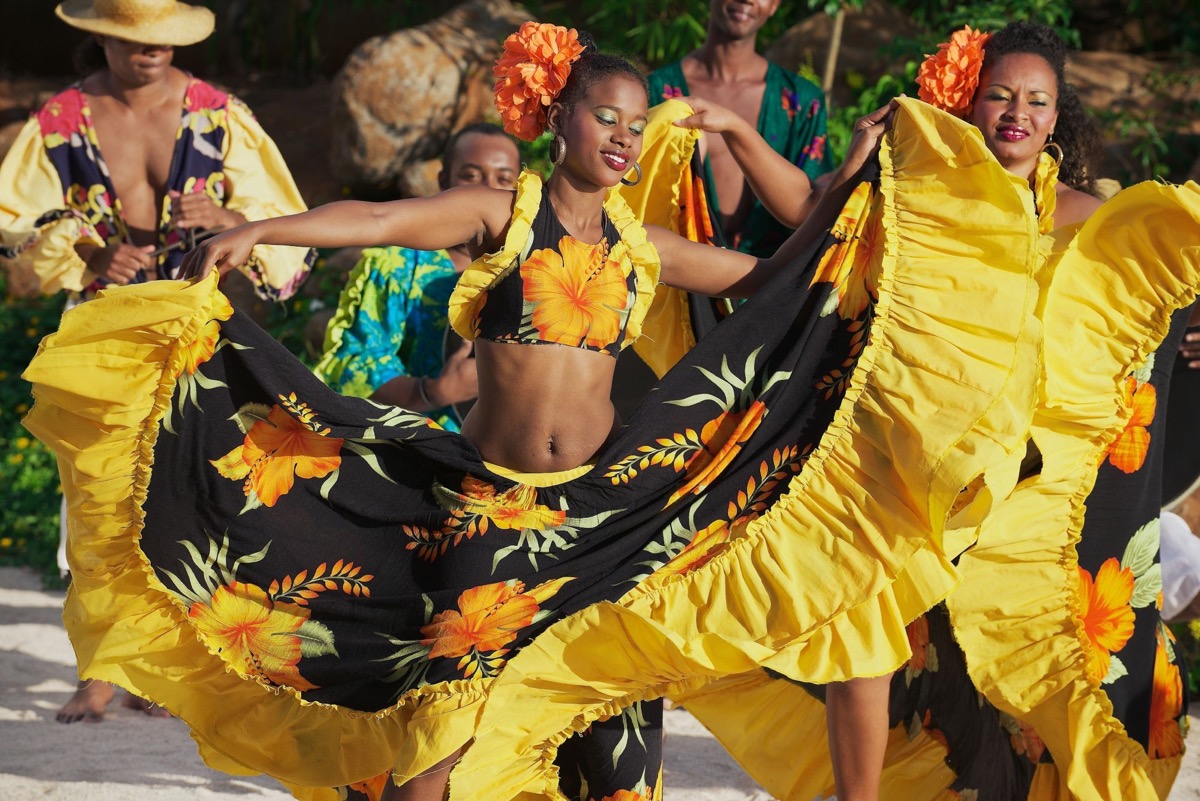
The Creole community is predominantly Roman Catholic, and the Christian calendar provides several public holidays including Christmas and All Saints Day. Sega, the traditional music and dance of Mauritius, originates in the Creole community. Characterised by rhythmic percussion on the ravane drum, call-and-response vocals and expressive movement, sega has been recognised by UNESCO as part of the intangible cultural heritage of humanity. It has evolved into contemporary forms including seggae, a fusion with reggae that carries social commentary.
Creole Mauritians are concentrated in coastal fishing villages, in Port Louis and in the south of the island. Mahebourg, on the southeast coast, has a strong Creole cultural identity and is home to the National History Museum, which documents the island's colonial and maritime past.
The Chinese community in Mauritius, known as Sino-Mauritians, numbers around 30,000 people and is descended primarily from Hakka and Cantonese migrants who arrived during the nineteenth and early twentieth centuries. Despite being a small percentage of the population, the community has had an outsized economic influence, particularly in commerce, retail and the import trade. Many of the larger supermarket chains and wholesale businesses in Mauritius were founded by Sino-Mauritian families.
Chinese New Year is celebrated publicly across the island, with fireworks in Port Louis and traditional lion dances in Chinatown, which sits in the capital near the central market. The Sino-Mauritian community is predominantly Christian (Catholic) today, though Buddhist and Taoist temples remain active. Spring Festival decorations appear in shopping centres and streets, reflecting how deeply the celebration has been absorbed into the broader Mauritian calendar.
Franco-Mauritians are the descendants of French settlers who colonised the island from 1715 and of subsequent European arrivals. They represent a small percentage of the total population, often estimated at around 2 percent, but have historically held significant economic power through ownership of large sugar estates. Many of the island's grand colonial houses, called vieilles maisons, were built by Franco-Mauritian families.
The community is Roman Catholic, French-speaking and closely connected to the agricultural and hospitality sectors. Several of the major hotel groups and sugar companies operating in Mauritius today were founded by or remain associated with Franco-Mauritian families. The community tends to be concentrated in the west and north of the island, including areas around Pamplemousses and the Black River district.
Mauritius has no single official spoken language, but it has three official languages for government and legal purposes: English, French and Mauritian Creole (which gained official status in recent years).
Mauritian Creole is the mother tongue of the majority of Mauritians and the language most people use in daily life, at home, in markets and among friends. It is a French-based creole with vocabulary drawn from Bhojpuri, English, Malagasy and other languages.
French is the language of the press, television, business correspondence and social conversation among educated Mauritians. Most contracts, menus, signage and commercial communications are in French. Expats with French will find daily life considerably easier than those without it, though English is widely understood in business and professional settings.
English is the language of parliament, the legal system, official government documents and the education system from primary level upward. Court proceedings, property deeds and legislation are in English. This makes Mauritius relatively accessible for British, South African and other Anglophone buyers navigating legal processes.
Bhojpuri is still spoken in some rural communities, particularly among older generations of Hindu Mauritians.
Mandarin and Hakka are maintained by the Sino-Mauritian community through language schools and cultural associations.
Tamil, Telugu, Urdu, Hindi and Marathi are taught in state schools as heritage languages, and each has its own cultural organisations and media.
In practice, most Mauritians code-switch fluidly, moving between Creole, French and English within a single conversation. A business meeting might open in English, shift to French for a detailed discussion and close with a Creole aside. Expats typically find this linguistic flexibility welcoming rather than exclusive.
One of the most concrete expressions of Mauritius's multicultural character is its public holiday calendar. The country observes religious festivals from four major traditions: Hinduism, Islam, Christianity and Chinese culture. As of the current calendar, public holidays include Diwali, Maha Shivaratri, Eid ul-Fitr, Christmas, Chinese Spring Festival and several others. This means that the working year is punctuated by celebrations from communities other than your own, and participation, or at least respectful acknowledgement, is a normal part of professional and social life.
Places of worship from different traditions often sit within a short distance of each other. It is not unusual to find a Hindu temple, a mosque and a Catholic church within the same village. This proximity is unremarkable to Mauritians and reflects a long-established, if sometimes imperfect, tradition of coexistence.
Mauritian cuisine is one of the clearest expressions of the island's ethnic mix. A typical week's eating might include dholl puri (a flatbread filled with split peas, a street food of Indian origin), rougaille (a tomato-based Creole sauce served with fish or meat), dim sum from a Sino-Mauritian bakery, and a French-style boulangerie croissant with coffee. The central market in Port Louis, the Grand Baie market and local bazaars are places where all these influences converge in a single visit.
Beyond sega and seggae, Mauritius has a growing arts scene. The Mahebourg Waterfront area, the Blue Penny Museum in Port Louis and various contemporary galleries reflect both heritage and modern creative work. The annual Porlwi by Light festival in Port Louis uses the capital's colonial architecture as a canvas for light installations and draws large crowds from across the island.
For incoming expats, it is worth understanding that Mauritian social networks often run along community lines, particularly in older generations. Business relationships, introductions and social invitations can reflect these networks. This is not exclusionary toward outsiders: Mauritians are generally hospitable toward newcomers, and the expat community is large enough that social integration is straightforward. However, understanding the community landscape helps explain certain social dynamics that can otherwise seem opaque.
Mauritius is a conservative society in some respects, particularly in religious and rural contexts. Visiting a temple, mosque or church requires modest dress. In business settings, dress is generally smart and formal. At the beach and in tourist areas, the norms are relaxed. Showing respect for religious observances, including being mindful of Ramadan fasting hours or removing shoes at temple entrances, is appreciated and noticed.
Mauritius uses an electoral system called the Best Loser System, which allocates a small number of parliamentary seats based on community representation to ensure that no major group is entirely excluded from the legislature. Communities are classified into four broad groups for electoral purposes: Hindu, Muslim, Sino-Mauritian and General Population (which includes Creole and Franco-Mauritian voters). This system has been debated and reviewed over the years, but it reflects the constitutional importance placed on communal balance in governance.
For expats and investors, this context matters because it explains why ethnic identity remains a topic of political and social relevance in Mauritius, even as daily life is largely integrated. The government's approach is to manage diversity through formal recognition rather than to treat ethnicity as irrelevant.
Different parts of Mauritius have different ethnic and cultural characters, and this can influence where expats feel most at home.
Port Louis, the capital, is the most ethnically mixed area on the island, with Creole, Indo-Mauritian, Sino-Mauritian and Franco-Mauritian communities all present. The city is dense, commercial and culturally layered.
The North, particularly Grand Baie and Pereybere, has a large expat population and a more cosmopolitan feel. English is widely spoken in shops and restaurants here.
The West, including Tamarin and Black River, is popular with South African and European expats and has a more relaxed, outdoor-oriented culture. Franco-Mauritian families have historically been concentrated in this region.
The East, around Mahebourg and Blue Bay, has a stronger Creole cultural identity and is generally quieter and less developed for the expat market.
The Centre, including Quatre Bornes and Curepipe, is predominantly Indo-Mauritian and is the commercial and educational heartland of the island.
Understanding these cultural geographies helps you choose a location that suits your lifestyle, not just your property budget.
Mauritius's ethnic diversity is not a complication to navigate: it is a feature that makes the island more interesting, more culinarily varied and more socially rich than a monocultural destination would be. The legal system operates in English, business is conducted in French and English, and the everyday warmth of Mauritian hospitality cuts across community lines. Expats who take the time to learn a few words of Creole, to attend a local festival or to understand the significance of a religious observance will find that integration comes quickly.
For property buyers, the cultural geography of the island is one more factor to weigh alongside location, price and legal structure. If you are considering a purchase under a Property Development Scheme or Smart City scheme, which are the main routes for non-citizens to buy freehold property in Mauritius, the Economic Development Board (EDB) is the primary official source for current investment thresholds and permit conditions. The Mauritius Revenue Authority (MRA) is the authority for tax questions.
Hand-picked
Riviere Noire · West

Tamarin · West


Baie du Cap · South

Tamarin · West

Baie du Cap · South

Beau Champ · East
Explore by region
Explore the site
Market updates, buying guidance and the best new listings, straight to your inbox.
Mauritius Real Estate · 19 Oct 2026
Explore beachfront houses in Mauritius. Learn where to find them, what they cost, how foreign buyers can purchase legally, and what to expect when…
Mauritius Real Estate · 16 Oct 2026
Everything you need to know about house rental in Mauritius: costs, locations, lease rules, and how to find the right property. Updated guide for…
Mauritius Real Estate · 16 Oct 2026
Explore the west coast of Mauritius: top neighbourhoods, property market, beaches, lifestyle, and what foreign buyers need to know before purchasing.
Mauritius Real Estate · 15 Oct 2026
Seen our properties on PropertyCloud? How the listings match, what you get searching with us directly, and the essentials of buying in Mauritius.
Mauritius Real Estate · 13 Oct 2026
Where to find a business park in Mauritius, what leasing or buying costs, and how foreign companies set up. Covers Ebène, Grand Baie, Pailles and…
Mauritius Real Estate · 12 Oct 2026
A practical guide to business insurance in Mauritius for property owners, landlords, and investors. Covers key cover types, costs, and what to check…
Browse our current listings or speak to an agent.


