FOR RENTExpat
Rs450K/mo
Riviere Noire · West
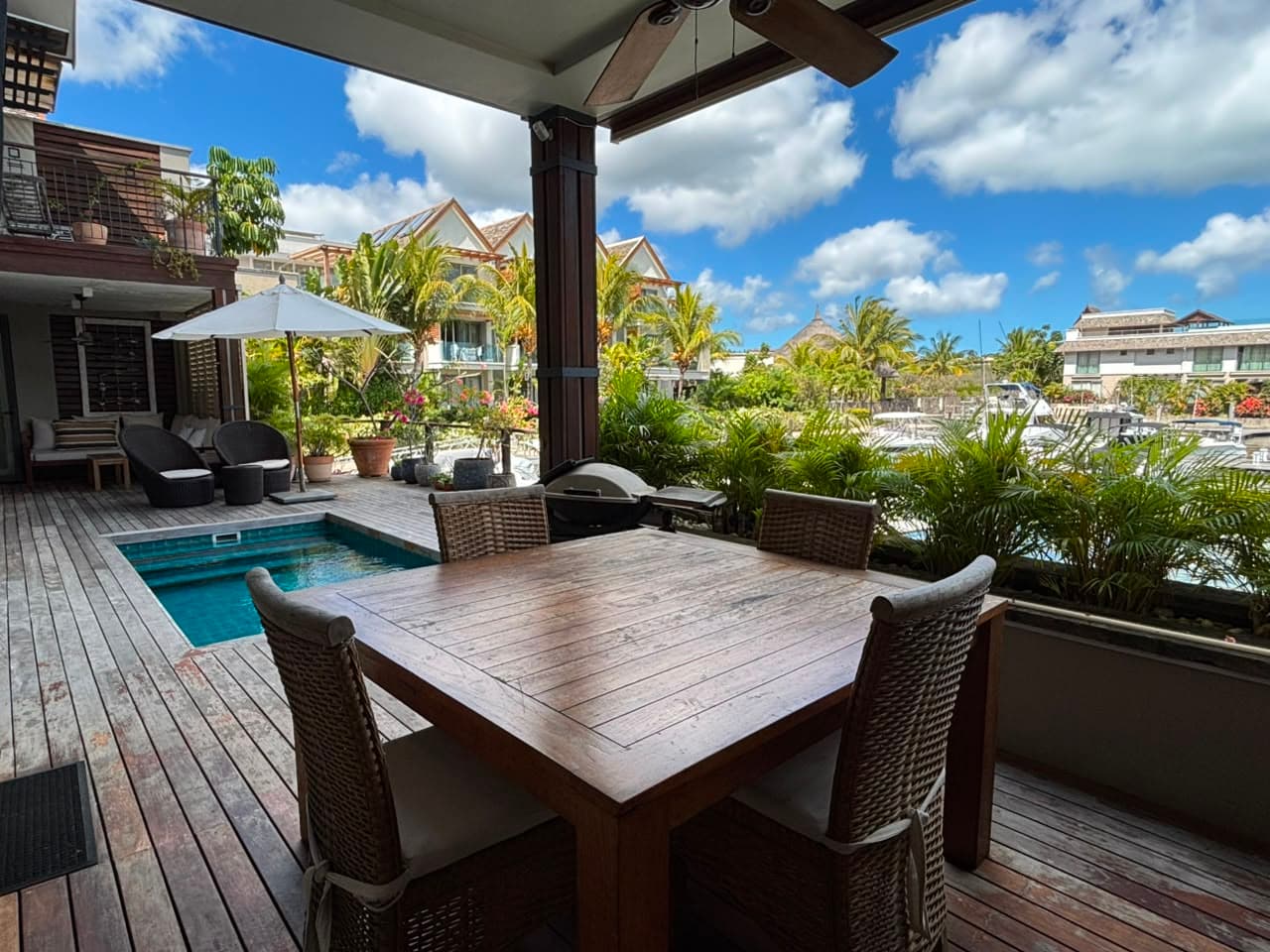
Ultimate Marina Lifestyle – Luxury Waterfront Residence, Private Mooring & Boat
44

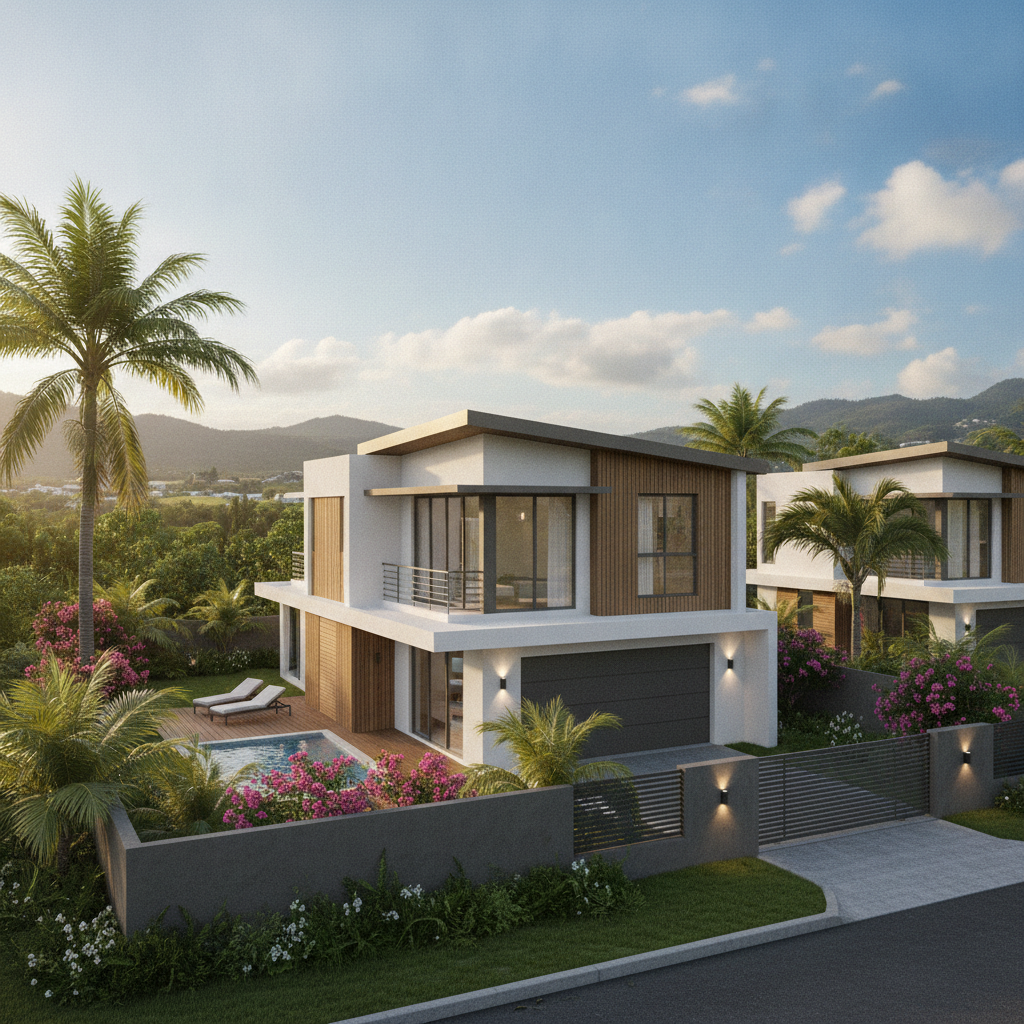
Discover suburban property in Mauritius: top neighbourhoods, property types, buying rules for foreigners, and how to find the best listings outside city
Suburban property in Mauritius refers to residential and mixed-use real estate located outside the main urban centres of Port Louis and Curepipe, typically in quieter districts that offer larger plots, lower density, and easier access to nature while still being within commuting distance of commercial hubs. Areas such as Flacq, Grand Baie, Tamarin, Moka, and Riviere du Rempart have grown significantly over the past decade, attracting both local families and foreign buyers who want space without full rural isolation.
For internationally mobile buyers, suburban Mauritius offers something the city cannot: room to build or buy a standalone villa, a townhouse with a garden, or a modern apartment in a low-rise development, often at a price per square metre that is noticeably lower than comparable coastal or city-centre stock. Understanding what is available, where to look, and how the legal framework applies to foreign purchasers is the starting point for any serious property search.
Flacq is one of the largest districts by area and population in Mauritius, covering the north-eastern and central-eastern parts of the island. Property in Flacq district tends to attract buyers who want genuine space at accessible price points. The district includes towns such as Centre de Flacq, Poste de Flacq, and Belle Mare, the last of which sits on one of the island's most photographed stretches of coastline.
The suburban interior of Flacq, away from the beach strip, offers detached houses, bungalows, and plots of bare land that rarely appear in the glossy coastal brochures. Families relocating for work often settle here because school access, supermarkets, and local services are well established. Several approved Property Development Scheme (PDS) and Smart City projects are also located within or near Flacq, meaning foreign buyers have a legal pathway to purchase and, if the property meets the threshold, to residency.
Moka, in the central highlands, has become the most deliberately planned suburban zone in Mauritius. The Moka Smart City project has transformed what was largely agricultural land into a mixed-use district with residential clusters, office parks, a regional hospital, and retail anchors. Buyers here tend to be professionals working in the financial services or technology sectors, drawn by the cooler climate, modern infrastructure, and proximity to the M1 motorway.
Property listings in Moka include apartments from studios to three-bedroom units, townhouses in gated estates, and standalone villas. Resale property in Mauritius is increasingly visible in Moka as the first wave of buyers from the mid-2010s begins to exit, creating a secondary market alongside new-build stock.
Tamarin sits in the Black River district on the western coast and has evolved from a surfing village into a well-serviced suburban community. It attracts a significant South African and European expatriate population. The town has supermarkets, international schools, medical clinics, and a growing retail strip. Property here ranges from modest townhouses to large villas with sea or mountain views.
The Black River gorges and the Tamarin Bay estuary give the area a distinctive character. Buyers who want suburban convenience with access to outdoor activity, particularly hiking, surfing, and kitesurfing, consistently rank this corridor among the best property deals in Mauritius relative to lifestyle value.
Grand Baie is technically a town rather than a suburb, but the residential zones immediately surrounding it, including Pereybere, Cap Malheureux, and Calodyne, function as suburban extensions. Property listings in this northern corridor are among the most active on the island. Buyers find a wide range from small apartments aimed at the rental market to large villas in private estates.
Retail property in Mauritius is also concentrated in this corridor, with shopping centres, restaurants, and service businesses lining the coastal road. For investors considering mixed-use or commercial exposure alongside residential holdings, the north offers more options than any other suburban zone.
Detached villas and bungalows are the most common form of suburban property in Mauritius. They range from modest single-storey bungalows on plots of around 200 to 400 square metres to large modern villas with pools on plots exceeding 1,000 square metres. Resale bungalows in areas like Flacq, Quatre Bornes, and Vacoas-Phoenix represent some of the most affordable entry points into the market.
Townhouses and semi-detached homes have grown in number as developers respond to demand from young families and downsizing professionals. Gated townhouse clusters in Moka, Tamarin, and Beau Bassin-Rose Hill offer maintenance-managed environments with shared amenities.
Apartments in low-rise blocks are common in suburban commercial centres such as Quatre Bornes, Rose Hill, and Centre de Flacq. These are often resale properties and can represent value for investors targeting the long-term rental market.
PDS and Smart City units are purpose-built for the international buyer segment. These are the only categories through which a non-citizen can purchase freehold property without special authorisation, and they come with the possibility of residency if the purchase price meets the minimum threshold (currently USD 375,000).
Foreign nationals cannot purchase just any property in Mauritius. The law restricts non-citizen freehold purchases to units within government-approved schemes: the Property Development Scheme (PDS), Smart City developments, the older Integrated Resort Scheme (IRS) and Real Estate Scheme (RES) stock that predates the PDS, and G+2 buildings (residential buildings of at least two upper floors above ground level).
Suburban areas in Mauritius have a growing number of PDS and Smart City developments, particularly in Moka, the northern corridor, and parts of Flacq. Buyers searching property listings in Mauritius should filter specifically for scheme-approved stock if they hold foreign nationality.
Under rules brought in by the Finance Act 2026 (in force from 13 August 2026), non-citizens buying under PDS, Smart City, RES, or G+2 pay a standard 5% registration duty (borne by the buyer) and a 5% land transfer tax (borne by the seller). An earlier increase to 10% that had been introduced by the Finance Act 2025 was repealed. A separate 10% duty applies to the seller only on G+2 homes located on State land or Pas Geometriques when sold to a non-citizen.
First-time buyers, whether local or foreign, benefit from registration duty relief on the first MUR 3 million of the purchase price for bare land and on the first MUR 6 million for a house or apartment, subject to eligibility conditions.
Always confirm the current rates with the Mauritius Revenue Authority (MRA) before exchange of contracts, as duty rules can change with each Budget.
A non-citizen who purchases a qualifying property at or above USD 375,000 under an approved scheme becomes eligible to apply for a residence permit. This permit covers the buyer and immediate dependants. It is separate from the Occupation Permit, which is work-linked: the Investor Occupation Permit requires a minimum initial investment of USD 100,000 in a qualifying business, and the Professional Occupation Permit requires a minimum monthly salary of MUR 50,000. Both permits are valid for 10 years and are renewable. The Economic Development Board (EDB) is the primary authority for permit applications.
The ability to buy property online in Mauritius, or at least to research and shortlist remotely, has improved substantially. Reputable property listing platforms now carry detailed listings with floor plans, photos, virtual tours, and in some cases direct inquiry forms that connect buyers to licensed estate agents.
When searching property listings in Mauritius online, a useful practice is to filter by district, property type, and scheme eligibility. This narrows results quickly. For suburban areas specifically, Flacq, Moka, Black River, and Grand Baie yield the broadest range of suburban stock.
Remote buyers should be aware that the legal process in Mauritius requires a notaire (notary) to draft and register the Deed of Sale. A buyer can grant a power of attorney to a local representative to sign on their behalf if they cannot travel. The notaire conducts title searches and ensures all encumbrances are disclosed before the deed is executed.
Due diligence steps for suburban property purchases include:
Resale property in Mauritius is a growing segment, particularly in suburban zones where the first generation of PDS and Smart City buyers is now selling. Resale units can offer advantages over new-build: the property exists and can be inspected, the management of the estate is already established, and pricing may reflect negotiation room that developers on new projects rarely offer.
The due diligence process for resale is the same as for new-build, but buyers should pay particular attention to the condition of any shared infrastructure, the financial health of the management company, and whether any special levies are pending for major repairs.
For foreign buyers, resale PDS and Smart City units remain fully eligible for purchase and for the residency pathway, provided the price meets the USD 375,000 threshold where residency is the goal.
Mauritius has no capital gains tax and no inheritance or estate tax. These two features are significant for long-term property investors: gains realised on the eventual sale of a suburban villa or apartment are not taxed, and passing property to heirs does not trigger a tax charge.
Rental income earned by residents is subject to personal income tax on a progressive scale: 0% on the first MUR 500,000 of annual net income, 10% on the band from MUR 500,001 to MUR 1,000,000, 20% on MUR 1,000,001 to MUR 12,000,000, and 35% above MUR 12,000,000. These rates apply from the income year beginning 1 July 2026. Non-residents receiving Mauritius-source rental income are also subject to tax; the applicable rate and any treaty relief should be confirmed with the MRA or a local tax adviser.
Property owners who are registered for VAT (relevant mainly for commercial or mixed-use holdings) face a 15% VAT rate. Corporate tax is also 15% for companies holding property through a corporate structure.
Retail property in Mauritius has followed the suburban residential expansion. Shopping strips, neighbourhood supermarkets, and small commercial centres have opened in Moka, Tamarin, Grand Baie, and Centre de Flacq to serve growing residential populations. Investors looking at suburban commercial property should note that the legal framework for non-citizen commercial property purchases differs from the residential pathway and typically involves company structures rather than direct personal ownership. Local legal advice is essential before committing to any commercial acquisition.
Suburban property in Mauritius represents a broad and accessible segment of the market, from affordable resale bungalows in Flacq to planned smart-city apartments in Moka. The legal framework is clear and well-established; the key is knowing which properties are open to you and working with professionals who know the local market.
Hand-picked
Riviere Noire · West

Tamarin · West


Baie du Cap · South

Tamarin · West

Baie du Cap · South

Beau Champ · East
Explore by region
Explore the site
Market updates, buying guidance and the best new listings, straight to your inbox.
Mauritius Real Estate · 19 Oct 2026
Explore real estate in Port Louis, Mauritius. Find houses for sale, apartments to rent, and expert guidance on buying property in the capital.
Mauritius Real Estate · 19 Oct 2026
Everything foreign owners need to know about property management in Mauritius: services, costs, how to choose a manager, and what it means for your…
Mauritius Real Estate · 19 Oct 2026
Understand Mauritius's ethnic groups, languages and cultural mix before you relocate. A clear, factual guide for expats and international buyers.
Mauritius Real Estate · 19 Oct 2026
Explore beachfront houses in Mauritius. Learn where to find them, what they cost, how foreign buyers can purchase legally, and what to expect when…
Mauritius Real Estate · 16 Oct 2026
Everything you need to know about house rental in Mauritius: costs, locations, lease rules, and how to find the right property. Updated guide for…
Mauritius Real Estate · 16 Oct 2026
Explore the west coast of Mauritius: top neighbourhoods, property market, beaches, lifestyle, and what foreign buyers need to know before purchasing.
Browse our current listings or speak to an agent.


