FOR RENTExpat
Rs450K/mo
Riviere Noire · West
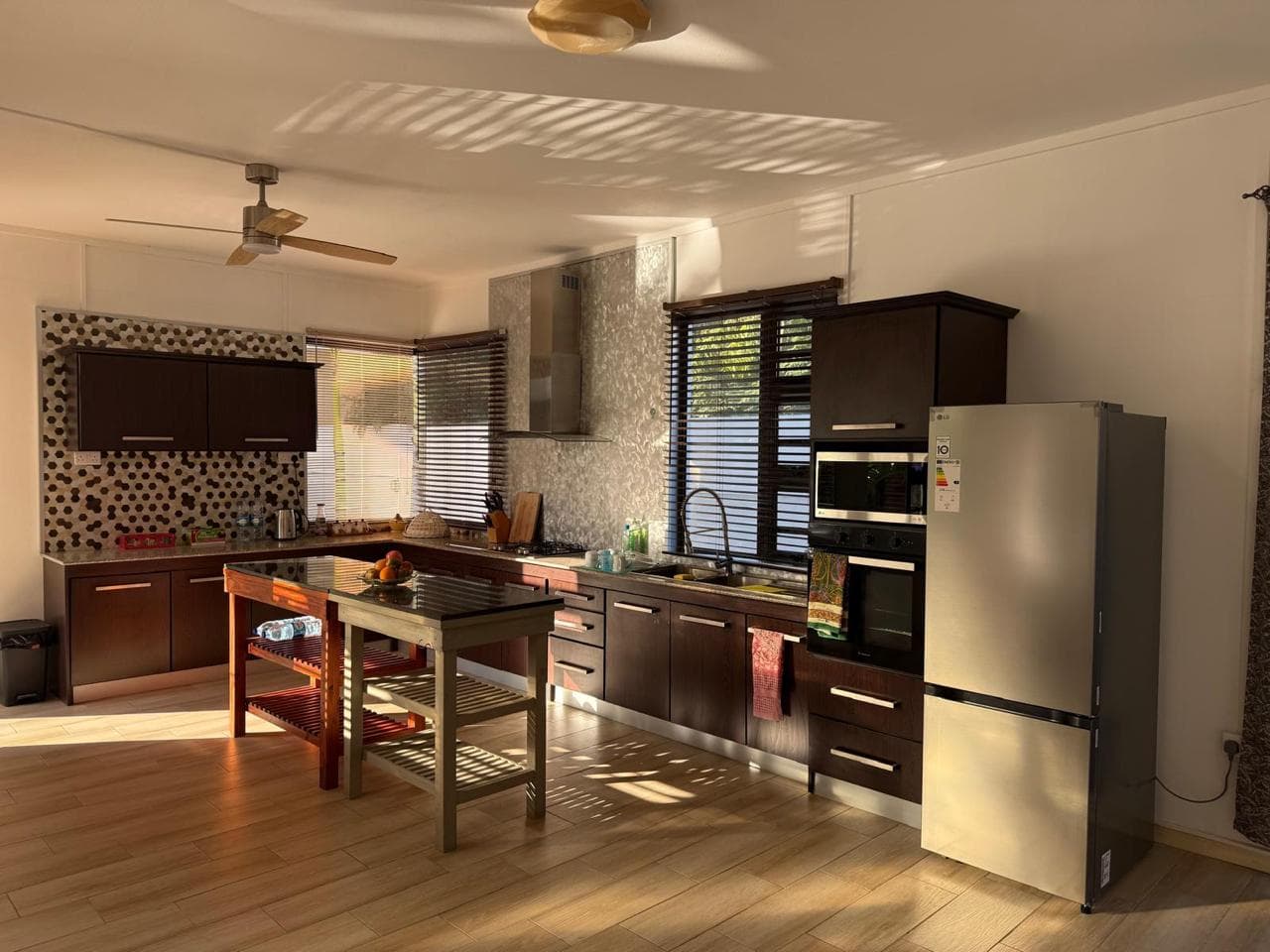
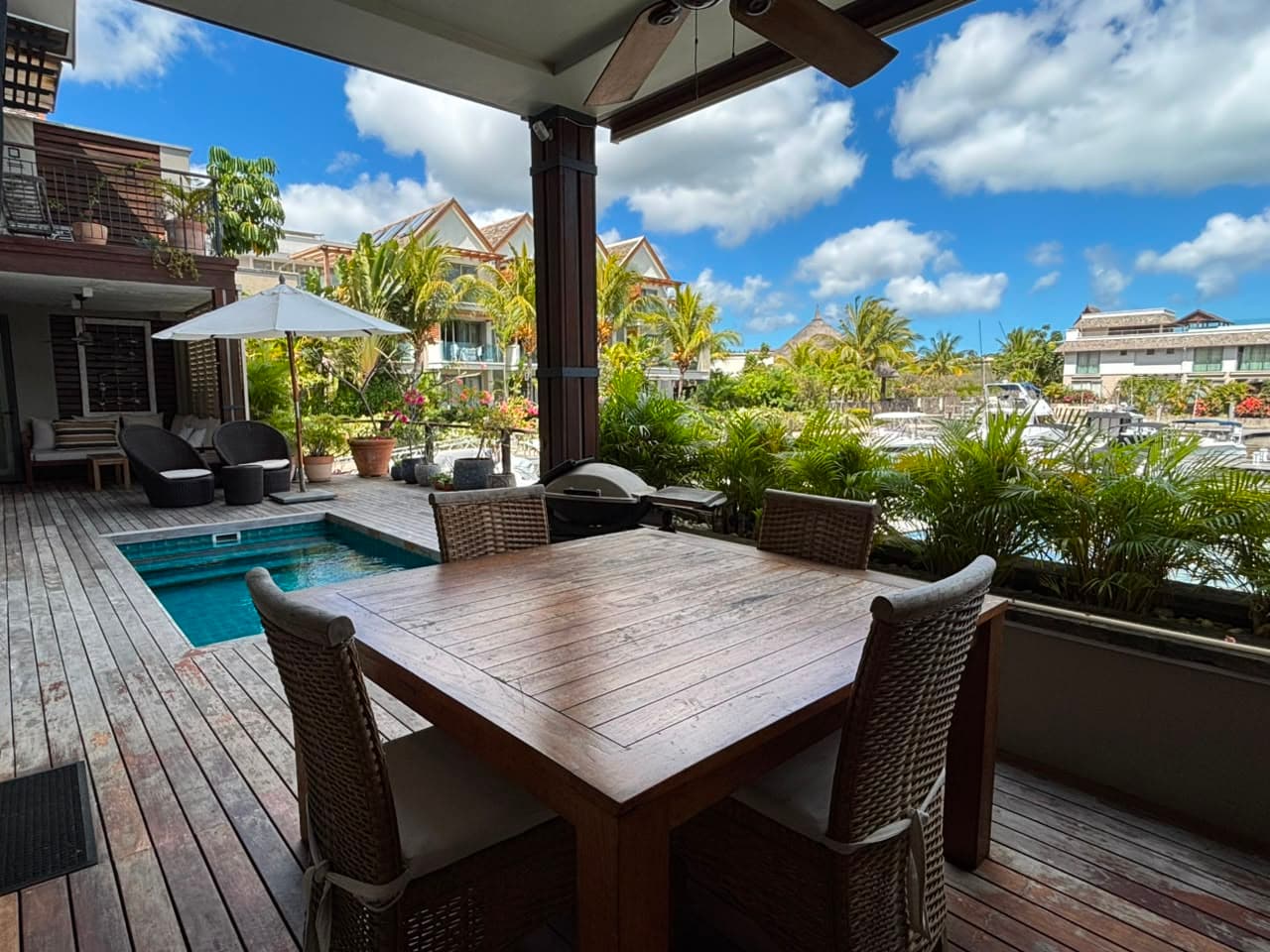
Ultimate Marina Lifestyle – Luxury Waterfront Residence, Private Mooring & Boat
44

Explore mansions for sale in Mauritius: locations, price ranges, legal frameworks for foreign buyers, and what to expect from the top end of the market.
At the top end of the Mauritius property market, a mansion typically means a standalone villa or large residence of 500 square metres or more of built area, set on a generous plot, with private pool, landscaped gardens, and a specification that rivals anything in the south of France or coastal South Africa. Prices for this category generally start around USD 1.5 million and extend well beyond USD 5 million for beachfront or golf-estate positions. Foreign nationals can purchase within government-approved schemes and, from a qualifying price point, receive a residence permit automatically tied to the purchase.
This guide explains where these properties are found, what drives their pricing, how foreign ownership works legally, and what the buying process involves from offer to registered deed.
Grand Baie is the most cosmopolitan area of Mauritius and draws buyers who want proximity to restaurants, marinas, and a lively social scene. Mansion-scale properties here tend to sit on private roads a short distance from the lagoon, often within gated communities. The northern coast around Pereybere, Cap Malheureux, and Pointe aux Canonniers also has substantial standalone villas, some with direct beach access, which is increasingly rare and commands a significant premium.
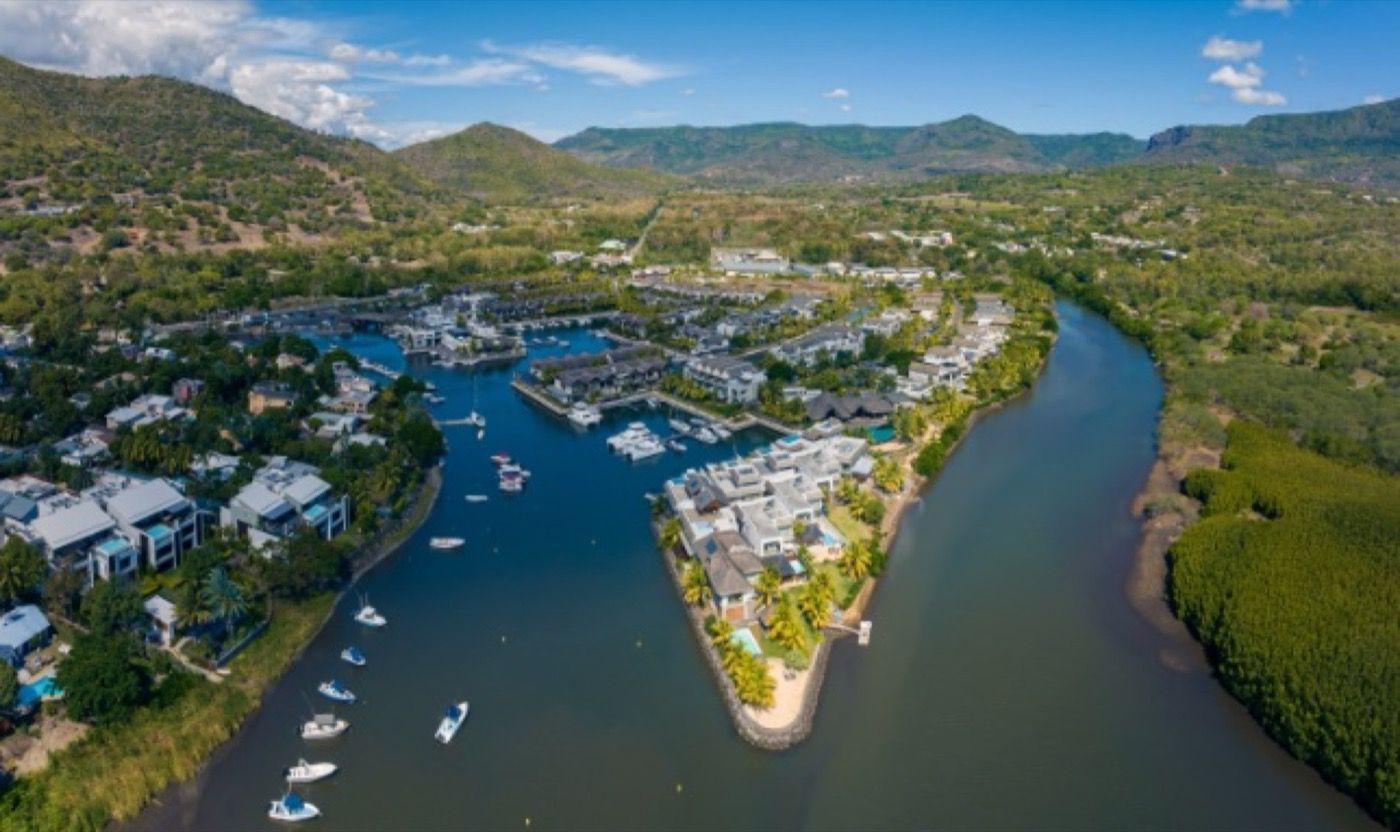
The west coast is the preferred address for many South African and European buyers. The combination of consistent surf, dramatic mountain backdrops, and a quieter atmosphere makes Tamarin and Black River particularly appealing. Several large PDS (Property Development Scheme) estates are concentrated in this corridor, offering mansion-scale plots and completed residences within professionally managed communities.
The east coast holds some of the finest lagoon beaches on the island. Belle Mare and Palmar attract buyers who prioritise natural beauty and calm water over nightlife. Mansion properties here are often part of integrated resort developments adjacent to five-star hotels, giving owners access to hotel services, golf courses, and beach clubs.
The south is less densely developed and offers a more private, estate-like feel. Bel Ombre is home to a large integrated resort and nature reserve. Buyers who want maximum space, privacy, and a cooler microclimate tend to look here. Plot sizes can be considerably larger than in the north or west.
For buyers less focused on beach access and more interested in space, altitude, and easy access to Port Louis business districts, the central plateau around Moka and Highlands offers large residential plots. Some Smart City developments in this zone include mansion-scale homes within masterplanned communities with international schools and commercial amenities nearby.
Foreign nationals cannot purchase freehold land in Mauritius outside specific government-approved frameworks. For mansion-scale properties, the two relevant frameworks are the Property Development Scheme (PDS) and Smart City schemes. A third category, the Ground Plus Two (G+2) scheme, applies to apartment-style buildings and is less relevant for standalone mansions.
The PDS replaced the earlier IRS and RES schemes and governs the development and sale of integrated residential communities. A PDS property is freehold, and a foreign buyer acquires full ownership rights. The minimum purchase price that triggers an automatic residence permit is USD 375,000, though many mansion-scale units are priced well above this threshold.
Smart Cities are large mixed-use developments combining residential, commercial, and innovation zones. Residential units within a Smart City can be purchased by foreign nationals under similar conditions to PDS. Some Smart City developments include villa and mansion-scale plots where buyers can commission bespoke construction.
A foreign national generally cannot buy a standalone villa or house outside an approved scheme without specific government authorisation, which is rarely granted for standard residential purchases. This means that virtually all mansion purchases by non-citizens will be within a PDS or Smart City development.
Under the Finance Act 2026, which came into force on 13 August 2026, the position for foreign buyers within approved schemes is as follows.
The buyer pays registration duty of 5% of the purchase price. The seller pays land transfer tax of 5% of the purchase price. These are the standard rates for PDS, Smart City, RES, and G+2 transactions involving non-citizens. An earlier increase to 10% that had been introduced under the Finance Act 2025 was repealed; foreign buyers in approved schemes are not subject to a 10% buyer duty.
A separate 10% duty applies to the seller only in the specific case of G+2 homes situated on State land or Pas Geometriques sold to a non-citizen. This does not apply to typical PDS or Smart City mansion purchases.
Mauritius has no capital gains tax, so any increase in the value of the property between purchase and eventual resale is not taxed at the point of sale. There is also no inheritance or estate tax, which makes Mauritius an efficient jurisdiction for estate planning involving real estate.
Notary fees, registration costs, and any mortgage-related charges are additional. Always confirm the current duty rates with the Mauritius Revenue Authority (MRA) and the Economic Development Board (EDB) before exchanging contracts, as rates can change with each annual Budget.
Yes, provided the purchase price is at least USD 375,000 within an approved scheme such as PDS or Smart City. The residence permit is issued to the buyer and can extend to their spouse and dependants. The permit remains valid for as long as the property is owned.
This is distinct from the Occupation Permit, which is a work-linked permit available to investors (minimum initial investment of USD 100,000) or professionals (minimum monthly salary of MUR 50,000). A buyer of a mansion at the qualifying threshold gets a residence permit, not an Occupation Permit, and is not required to invest in a business or be employed in Mauritius.
For buyers considering both a property purchase and business activity, it is worth understanding how the two permit categories interact. The EDB is the authority to consult on this.
Most PDS and Smart City developments charge a monthly or annual management levy covering security, landscaping of common areas, infrastructure maintenance, and sometimes access to shared amenities such as a beach club or sports facilities. For a large property, these fees can range from MUR 5,000 to MUR 30,000 or more per month depending on the development and the size of the plot.
A mansion of 500 square metres or more typically requires a housekeeper, a gardener, and often a pool technician. Many owners also employ a caretaker if they are not resident full-time. Domestic employment in Mauritius is governed by local labour law, and minimum wage legislation applies. Budgeting for a small team of two to four people is realistic for a property of this scale.
Electricity costs in Mauritius can be significant for large air-conditioned properties. Many PDS developments now include solar infrastructure or allow owners to install panels, which reduces ongoing costs. Water is metered and generally affordable.
Cyclone insurance is not optional in practical terms. Mauritius sits in the Indian Ocean cyclone belt, and a property of significant value should carry comprehensive structural coverage. Premiums vary by insurer, location, and construction standard.
Buyers typically work with a registered real estate agent who specialises in the relevant scheme type. Once a property is identified, a letter of intent or preliminary offer is submitted. At this stage the price, inclusions, and any conditions are agreed in principle.
A notary drafts a preliminary sale agreement, known locally as a CPV or promise of sale. The buyer typically pays a deposit of 10% of the purchase price at this stage. This agreement is legally binding and sets out the conditions, timeline, and consequences of default by either party.
The period between the CPV and the final deed allows both parties to complete due diligence. For a foreign buyer, this includes confirming the property's status within the approved scheme, verifying that all permits and authorisations are in order, and arranging financing if required. Local banks and international private banks active in Mauritius both offer mortgage products for non-citizens, though terms vary.
The final Deed of Sale is signed before a Mauritian notary. Both parties or their authorised representatives must be present or represented by a power of attorney. The notary registers the deed with the Registrar General, at which point ownership formally transfers. The residence permit application, where applicable, is submitted through the EDB following registration.
Mauritius enforces building codes designed for cyclone resilience, but the standard of execution varies between developers. Buyers should ask for structural engineering reports and confirm that the property meets current standards. Premium developments use reinforced concrete frames, impact-resistant glazing, and roof systems engineered for high wind loads.
These are different things. A property with a sea view may be set back from the coast and separated from the beach by a public road or coastal reserve. Direct beach access, meaning the plot extends to or has a right of way to the shoreline, is significantly rarer and more valuable. Buyers should clarify exactly what beach or lagoon rights are included.
Power outages, while infrequent in most areas, do occur during severe weather. A mansion at this price point should have a standby generator sized to run the full property, including air conditioning and pool equipment. A water storage tank or borehole is also worth confirming, particularly in the drier north and west.
A Mauritian notary will carry out title searches, but buyers should also independently confirm that the development holds all necessary approvals from the Board of Investment (now the EDB) and that the property is properly registered within the scheme. Purchasing outside an approved scheme without the correct authorisation can result in ownership being challenged.
If you take up residence in Mauritius and become tax resident, your worldwide income may become subject to Mauritian personal income tax, depending on your specific circumstances and any applicable double taxation agreements.
Personal income tax in Mauritius is progressive. From the income year beginning 1 July 2026, the rates are: 0% on the first MUR 500,000 of net income; 10% on income between MUR 500,001 and MUR 1,000,000; 20% on income between MUR 1,000,001 and MUR 12,000,000; and 35% on income above MUR 12,000,000. There is no flat rate of 15% on personal income; that figure is outdated. VAT and corporate tax are separately set at 15%, but these do not apply to individual income.
Tax residency rules, treaty benefits, and the treatment of foreign-source income are complex and depend on individual circumstances. A Mauritian tax adviser should be consulted before making any residency decision.
Hand-picked
Riviere Noire · West

Tamarin · West


Baie du Cap · South

Baie du Cap · South

Riviere Noire · West

Tamarin · West
Beau Champ · East
Explore by region
Explore the site
Market updates, buying guidance and the best new listings, straight to your inbox.
Mauritius Real Estate · 29 Oct 2026
Discover what it's like to live in Phoenix, Mauritius. Location, amenities, lifestyle, and property options including apartments and houses for sale.
Mauritius Real Estate · 29 Oct 2026
A practical guide to the cost in Mauritius covering housing, food, transport, utilities and taxes to help expats and buyers plan their move.
Mauritius Real Estate · 28 Oct 2026
Looking for lexpress mauritius property listings? Explore verified property for sale in Mauritius, area guides, market news and the best deals…
Mauritius Real Estate · 28 Oct 2026
Use a lease calculator in Mauritius to estimate monthly rent, total lease cost, stamp duty, and VAT. Plain-English guide for tenants and landlords.
Mauritius Real Estate · 28 Oct 2026
Find the best Mauritius newspaper sources for today's news. A complete guide to print and online outlets for expats, investors and relocating…
Mauritius Real Estate · 28 Oct 2026
Discover when Mauritius's dry season runs, what weather to expect month by month, and why it matters for property viewings and relocation planning.
Browse our current listings or speak to an agent.