FOR RENTExpat
Rs450K/mo
Riviere Noire · West
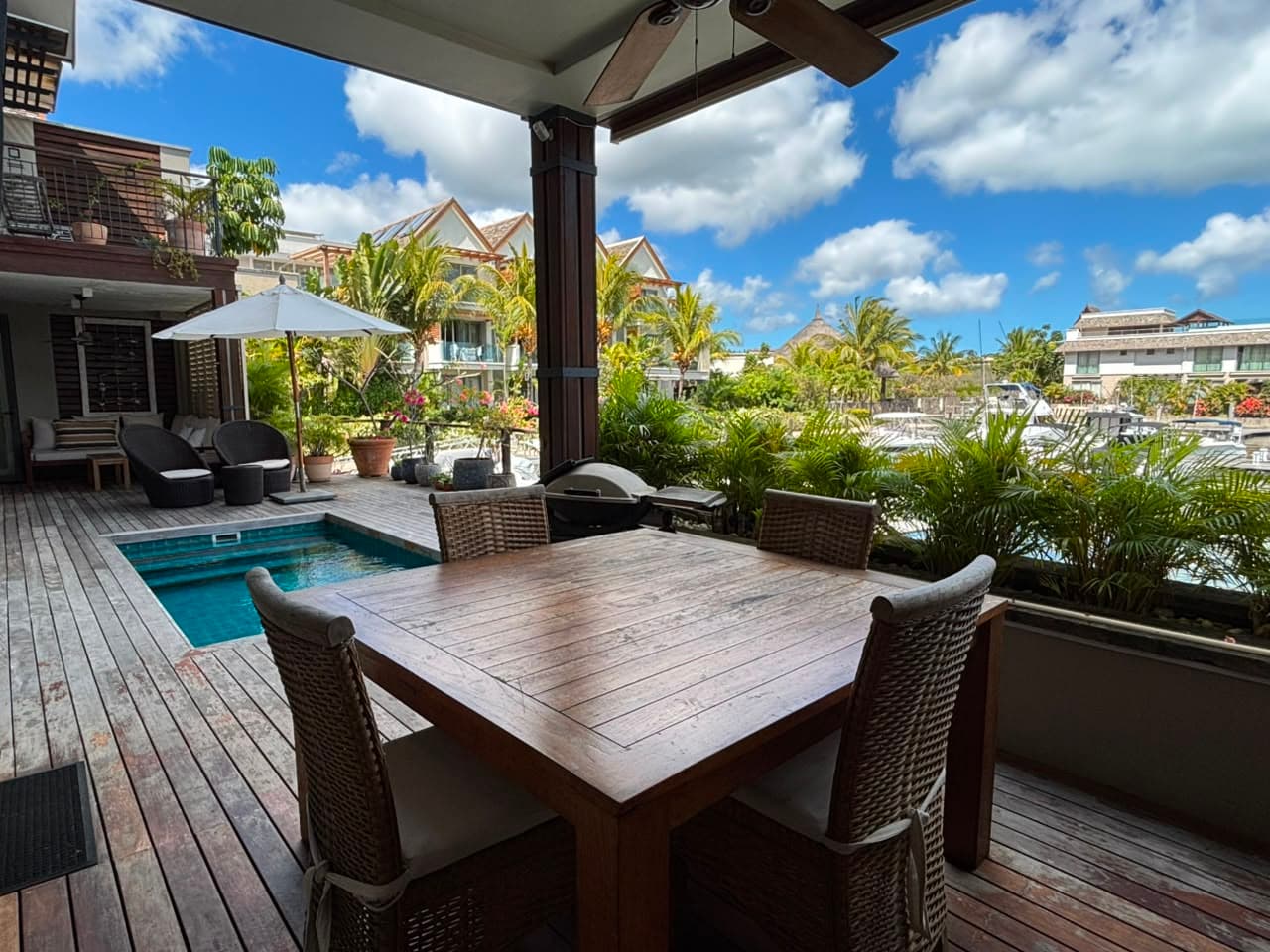
Ultimate Marina Lifestyle – Luxury Waterfront Residence, Private Mooring & Boat
44

Explore the west coast of Mauritius: top neighbourhoods, property market, beaches, lifestyle, and what foreign buyers need to know before purchasing.
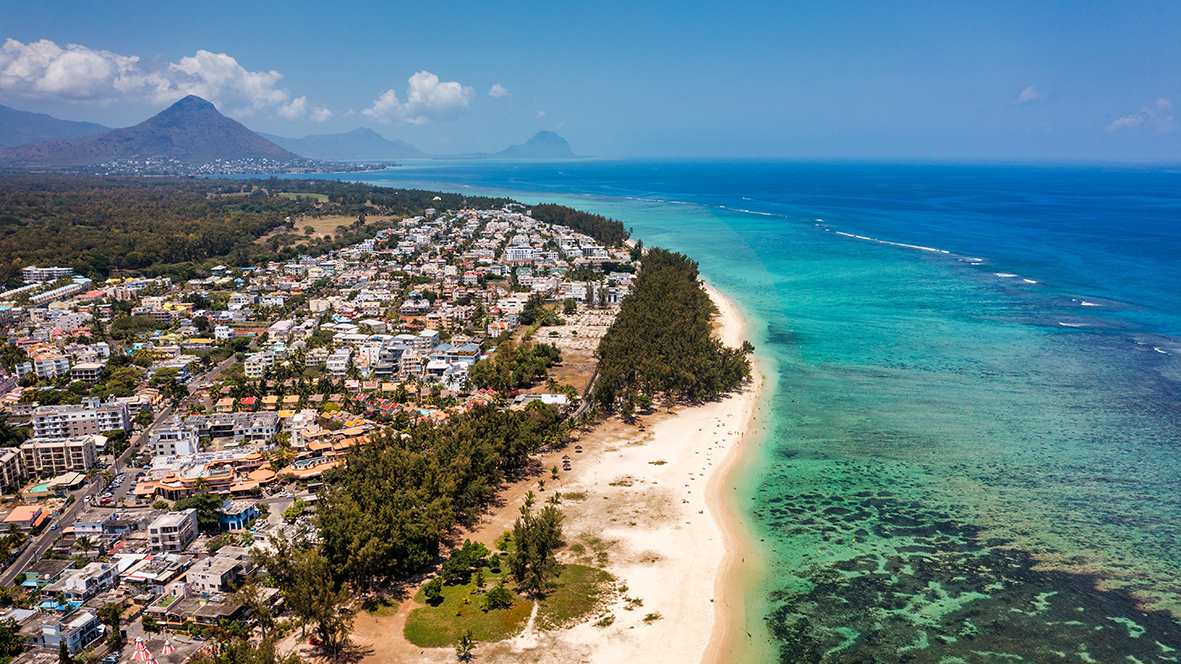
The west coast of Mauritius runs roughly from Albion in the north down to Bel Ombre in the south, taking in some of the island's most sheltered beaches, the commercial hub of Flic en Flac, and a string of resort villages that attract both long-term residents and foreign buyers. It is the sunniest part of the island, protected from the south-east trade winds by the central mountain range, which means calmer seas and more reliable weather than the east coast for most of the year. For internationally mobile buyers comparing locations across the island, the west coast consistently ranks alongside Grand Baie in the north for the depth of its property market and the quality of its lifestyle infrastructure.
Flic en Flac is the commercial and social centre of the west coast. The village sits behind a long public beach of white sand and shallow water that is genuinely one of the best on the island for swimming year-round. The main road through the village is lined with supermarkets, restaurants, pharmacies, banks, and casual beach bars, giving it a lived-in energy that more exclusive resort areas lack.
For property buyers, Flic en Flac offers the widest range of price points on the west coast. Apartments in small residential buildings, ground-floor units with private gardens, and penthouses with sea views all exist within a compact area. This variety makes it attractive to professionals on Occupation Permits who want walkable convenience, as well as retirees who prefer not to depend on a car for daily errands.
Tamarin and its immediate neighbour Black River sit about ten kilometres south of Flic en Flac and have a noticeably different character. The bay at Tamarin is famous for its surf break, which draws a small international surfing community that has settled permanently in the area. The wider neighbourhood has attracted a younger, more outdoor-oriented demographic over the past decade, and this is reflected in the types of properties available: larger villas on generous plots, townhouse developments with communal pools, and a growing number of approved scheme properties aimed at foreign buyers.
Black River itself is quieter, with a small fishing harbour and access to the Black River Gorges National Park, the largest nature reserve on the island. Buyers who want space, privacy, and proximity to hiking and mountain biking trails tend to gravitate here rather than to the more built-up coastal strip.
Continuing south, the landscape becomes more dramatic and the development thinner. La Preneuse, Petite Riviere Noire, and eventually Bel Ombre are quieter coastal communities where large hotel and resort developments sit alongside private villas. Bel Ombre in particular has seen significant investment through a Smart City development that includes residential units, a heritage hotel, and leisure facilities. For buyers seeking a resort-style environment with on-site amenities and a quieter pace, this southern stretch of the west coast is worth serious consideration.
At the northern end of the west coast, Albion is primarily a residential area popular with Mauritian families and long-term expatriates. It is close to the Cascavelle Shopping Mall, which serves as a practical retail and services hub for the entire region. Property prices in Albion are generally more moderate than in Tamarin or the beachfront sections of Flic en Flac, making it a practical choice for buyers prioritising space over a sea view.
The west coast receives more sunshine hours than the east coast because the central plateau blocks the moisture-laden south-east trade winds. Rainfall is lower, and the sea is calmer for more months of the year. The lagoon at Flic en Flac is protected by a reef and is safe for swimming for most of the year, including during the cyclone-adjacent months when east coast conditions can be rougher.
Sir Seewoosagur Ramgoolam International Airport is located on the south-east of the island, which means the west coast is roughly 45 to 60 minutes by road depending on traffic and your exact destination. This is a genuine consideration for frequent travellers. The motorway network connects the west coast to Port Louis (the capital) in around 20 to 30 minutes from Flic en Flac, making it viable to commute to the city for work while living on the coast.
The west coast has matured considerably as a residential destination. Beyond the beach and the natural environment, buyers will find:
Foreign nationals cannot buy freehold property in Mauritius freely. They must purchase through one of the government-approved schemes: the Property Development Scheme (PDS), a Smart City development, or a G+2 (ground plus two floors) apartment building. Each scheme has its own design and density standards, and properties sold through them are the only route to freehold ownership for non-citizens.
The west coast has a solid supply of PDS and Smart City units, particularly in the Tamarin, Black River, and Bel Ombre areas. Flic en Flac has a mix of G+2 apartments and some PDS developments. Buyers should verify the scheme classification of any specific property before proceeding, as this determines their legal route to ownership and their eligibility for a residence permit.
Purchasing a property at or above USD 375,000 under an approved scheme (PDS or Smart City) qualifies the buyer for a residence permit in Mauritius. The permit is linked to the property and extends to the buyer's spouse and dependants. This is one of the most straightforward routes to Mauritian residency and is a significant draw for buyers from Europe and South Africa who want a formal legal status on the island.
Under the rules introduced by the Finance Act 2026 (in force from 13 August 2026), non-citizens buying under PDS, Smart City, RES, or G+2 schemes pay the standard 5% registration duty as the buyer. The seller pays 5% land transfer tax. The earlier increase to 10% that was introduced by the Finance Act 2025 was repealed, so buyers should not rely on any information citing a 10% buyer duty for approved scheme properties.
A separate 10% duty applies to the seller only on G+2 homes located on State land or Pas Geometriques (the coastal reserve) when sold to a non-citizen. This is a seller-side cost and does not affect the buyer's registration duty.
First-time buyers in Mauritius receive registration duty relief on the first MUR 3 million of the purchase price for bare land, or the first MUR 6 million for a house or apartment. This relief applies to eligible first-time buyers and is worth confirming with a local notary before signing any agreement.
Always verify current duty rates and thresholds directly with the Mauritius Revenue Authority (MRA) and the Economic Development Board (EDB), as these figures can change with each annual Finance Act.
Mauritius levies no capital gains tax and no inheritance or estate tax. For buyers who are also thinking about estate planning or the eventual resale of a property, this is a material advantage compared with many European jurisdictions.
The west coast is not walkable in its entirety. Flic en Flac village is compact enough to manage on foot or by bicycle for daily errands, but Tamarin and Black River require a car for most practical purposes. Driving is on the left, roads are generally well maintained on the main routes, and traffic is manageable outside of peak commuting hours into Port Louis.
The west coast sits at the mid-to-upper range of the Mauritian cost of living spectrum. Eating out in Flic en Flac ranges from very affordable local restaurants to mid-range international cuisine. Imported goods carry a premium as they do across the island, but locally produced food, fruit, and vegetables are reasonably priced at local markets. Utility costs, domestic help, and property maintenance are generally lower than in Western Europe, which is a practical factor for retirees and remote workers managing a budget.
Foreign nationals who plan to work in Mauritius while living on the west coast need an appropriate Occupation Permit. The Investor Permit requires a minimum initial investment of USD 100,000. The Professional Permit requires a minimum monthly salary of MUR 50,000, harmonised across all sectors. Both permits are valid for ten years and are renewable. The EDB is the issuing authority and the correct first point of contact for permit applications.
Residents of Mauritius pay personal income tax on a progressive scale. From the income year beginning 1 July 2026, the rates are: 0% on the first MUR 500,000 of annual income, 10% on income between MUR 500,001 and MUR 1,000,000, 20% on income between MUR 1,000,001 and MUR 12,000,000, and 35% on income above MUR 12,000,000. The commonly cited flat rate of 15% is outdated and no longer accurate for personal income tax. VAT and corporate tax remain at 15% separately. Confirm your specific tax position with a qualified Mauritian tax adviser and the MRA.
The west coast is often compared directly with Grand Baie in the north, which is the other main hub for foreign residents and buyers. Grand Baie has a denser concentration of international restaurants, nightlife, and shopping, and its property market is well established. The west coast tends to offer more space per property at comparable price points, a less congested feel, and better beach conditions for swimming. Buyers who prioritise an active outdoor lifestyle (surfing, hiking, diving) often prefer the west coast. Those who want the busiest social scene and the most immediate access to retail tend to lean toward Grand Baie.
The east coast, particularly around Belle Mare and Trou d'Eau Douce, offers a different proposition again: quieter, more rural, with some of the island's most beautiful beaches but fewer amenities and a longer drive to the airport.
Hand-picked
Riviere Noire · West

Baie du Cap · South

Tamarin · West

Tamarin · West


Baie du Cap · South

Beau Champ · East
Explore by region
Explore the site
Market updates, buying guidance and the best new listings, straight to your inbox.
Mauritius Real Estate · 16 Oct 2026
Everything you need to know about house rental in Mauritius: costs, locations, lease rules, and how to find the right property. Updated guide for…
Mauritius Real Estate · 15 Oct 2026
Seen our properties on PropertyCloud? How the listings match, what you get searching with us directly, and the essentials of buying in Mauritius.
Mauritius Real Estate · 13 Oct 2026
Where to find a business park in Mauritius, what leasing or buying costs, and how foreign companies set up. Covers Ebène, Grand Baie, Pailles and…
Mauritius Real Estate · 12 Oct 2026
A practical guide to business insurance in Mauritius for property owners, landlords, and investors. Covers key cover types, costs, and what to check…
Mauritius Real Estate · 10 Oct 2026
Everything you need to know about getting a skipper license in Mauritius, from exam requirements to costs, plus how it connects to waterfront living.
Mauritius Real Estate · 9 Oct 2026
Find bungalows for rent in Mauritius: coastal, urban, and waterfront options explained, with inspection tips and neighbourhood comparisons.
Browse our current listings or speak to an agent.


